Showing posts with label olives. Show all posts

Sunday, August 1, 2010

Recipe for Braised Romanesco Broccoli with Onions and Olives

Vibrantly lime-green, with florets shaped like spiky Balinese temples whirling around a central core, Romanesco broccoli is an attention-grabber.

When I picked out a head at Saturday’s South Anchorage Farmer’s Market, the queries started immediately: “What’s that?” “What’ll you do with it?” “Is that any good?” Despite my enthusiastic assurances, some questioners remained dubious about Romanesco broccoli’s edibility. An engineer decided to buy one only after I told him Romanesco broccoli is used by mathematicians to illustrate
logarithmic spirals and fractals.

A relative of both broccoli and cauliflower, the flavor of Romanesco broccoli is milder than either of its better known cousins. When well-cooked, the flavor is creamy and nutty, without the bitter edge some family members have.

Braised Romanesco Broccoli with Onions and Olives
Serves 4

Cauliflower, of any color, may be substituted for Romanesco broccoli. Plain Kalamata olives are delicious, though I prefer using
Roasted Kalamata Olives in recipes like this. Dry-cured or salt-cured olives (such as those from Thassos) may also be used, but be sure to taste them and use less than 1/2 cup if they’re strong flavored. The broccoli will cook more quickly and evenly with the right sized pan; ideally, you need a covered pan 2” wider in diameter than the whole broccoli.


Mediterranean Cooking in Alaska has moved as of March 2011. To read this post please go to


http://www.laurieconstantino.com/braised-romanesco-broccoli/


Please click on over and visit my new site. Thank you!


Wednesday, July 14, 2010

Recipes for Swiss Chard Braised with Olives and Feta (Σέσκουλο με Ελιές και Φέτα) & Pancakes with Leftover Greens, Olives and Feta

Greens season is here. Gardens and farmers’ markets in Anchorage are filled with every type of cool weather green. Swiss chard, spinach, and kale are in their prime.


It’s also the season during which many Alaskans are doing hard duty out on the salmon grounds, making sure freezers are filled with fish for the upcoming winter.


The best reason to eat greens and salmon is they just plain taste good. Luckily, both are good for your health: greens because they’re high in vitamins, minerals, and fiber and salmon because it’s loaded with omega-3 fatty acids


Freshly caught salmon has so much flavor it doesn’t need anything more than salt, pepper, and a little time on the grill or cast-iron pan.  Swiss Chard Braised with Olives and Feta is a good accompaniment. The greens’ earthiness, when paired with salty olives and feta, balances fresh salmon’s richness.


Swiss Chard Braised with Olives and Feta (Σέσκουλο με Ελιές και Φέτα)
Serves 4
Any greens, wild or domesticated or, better yet, a mixture of greens, can be substituted for Swiss chard.  This is delicious made with plain Kalamata olives, but I prefer using Roasted Kalamata Olives. Dry-cured or salt-cured olives (such as those from Thassos) may be substituted, but be sure to taste them and use less than 1/2 cup if they’re strong flavored. Most Greeks squeeze a lemon wedge over braised greens; I like them better plain. Serve lemon wedges on the side so each eater can choose their own amount of lemon. Swiss Chard Braised with Olives and Feta goes well with grilled or pan-fried salmon and other simply cooked seafood.


2 large or 3 medium bunches Swiss chard (about 10-12 cups cleaned, chopped leaves)
2 Tbsp. olive oil
2 Tbsp. minced garlic
1/2 cup pitted Kalamata olives, roughly chopped
Freshly ground black pepper
Salt
1/2 cup feta cheese, crumbled
Lemon wedges


Strip Swiss chard leaves from stems; reserve stems for another use.  Wash and roughly chop the leaves (don’t dry leaves; the clinging water helps cook them).


In a Dutch oven or deep sauté pan, sauté garlic in olive oil over medium heat for 30 seconds, being very careful not to burn the garlic. Stir in Swiss chard, olives, a liberal seasoning of black pepper, and a light seasoning of salt (olives and feta also add salt). Cover, turn heat down to low, and cook until chard is tender, but not falling apart. (The dish may be made ahead to this point and reheated just before serving.)


Remove chard and olives from pan with slotted spoon. Put in serving bowl along with the feta. Toss well.  Serve with lemon wedges on the side.

Bonus Recipe

Pancakes with Leftover Greens, Olives and Feta
Makes 4-6 pancakes
Too lazy to make crepes, I mixed leftover Swiss Chard Braised with Olives and Feta into a simple batter and cooked it into pancakes. These cakes contain the same flavors as crepes, but can be mixed and cooked in less than 1/2 hour with a lot less hassle.  I served the savory pancakes with soft goat cheese, basil shreds, and thinly sliced prosciutto; they made a lovely lunch.


3/4 - 1 cup leftover greens, olives, and feta
3/4 – 1 cup milk
3/4 cup flour
1 egg
Salt
Freshly ground black pepper
Oil for griddle


Put leftover greens in a strainer set over a bowl, press down to squeeze out as much liquid as possible. Measure the liquid and add enough milk to make one cup.  Whisk egg and half the milk mixture into flour. Whisk in remaining milk mixture. Whisk in greens and season with salt and freshly ground black pepper.


Heat small amount of oil in a griddle or cast iron frying pan over medium heat.  When pan is hot, ladle in 1/2 cup batter, spreading it out to form a 7” circle. Cook it on one side until it’s dry around the edges and the underside is nicely browned when lifted. Flip and cook on the second side.  Repeat until all the batter is used.


Serve plain, with cheese, or with thinly sliced prosciutto or salami.

Sunday, November 15, 2009

Recipe for Kale Puttanesca (Μακαρονάδα Πουτανέσκα με Κατσαρό Λάχανο)

Kale added to spicy puttanesca sauce makes a surprisingly delicious topping for chewy pasta. We recently enjoyed Kale Puttanesca for dinner and spent the whole meal alternating sounds of satisfaction with “this is really good” and “mmmmm -- I want this again.”

My recipe calls for more capers, garlic, and anchovies than are often used in puttanesca recipes; kale and chewy pasta balance the strong flavors.  Even so, Kale Puttanesca is best served to those, like us, who like assertively seasoned food.


To complement Kale Puttanesca sauce, I used Maccheroni al Ferratto, rustic artisanal pasta, originally from Calabria, that was traditionally shaped around iron umbrella spokes.

Lately, I’ve been comparing regular dried pasta from the supermarket with more expensive “artisanal” pastas found in specialty stores and upscale markets.  All dried pasta is made using extrusion dies, metal patterns that create unique pasta shapes.  However, the dies used to make regular and artisanal pastas differ: regular pasta is made using dies with a Teflon insert and artisanal pasta is made with bronze dies.

Regular pasta has a hard, slick finish, while artisan pasta is rough and uneven: “Traditional dies made entirely of bronze make the pasta surface rough [and more porous], which helps to capture the sauce, whereas the Teflon insert gives the product an even surface and a smoother texture,” according to food scientists. On the other hand, makers of Teflon-die pasta claimthe rougher surface [of bronze-die pasta] allows cooking water to penetrate too quickly, making for less-than-ideal quality.”

The two types of pasta also differ in how they’re dried. Regular pasta is dried in ovens “the size of a football field” for 2-4 hours over high heat.  Artisanal pasta is dried for 24 to 50-plus hours “in very warm (but never hot), humid environments in which moisture can be reduced slowly, without damaging the texture of the finished product.”

I prefer artisanal pasta with very simple pasta sauces, such as oil and garlic, where the texture of the pasta makes a significant difference. I also prefer artisanal pasta in dishes, like Kale Puttanesca, that call for thicker, chewier pastas.  For all other purposes (and when I don’t want to spend the money on artisanal pasta) I happily use regular dried pasta from the supermarket.

No matter what type of pasta you use, be sure to cook it al dente; soft, overdone pasta is the bane of even the best pasta sauce.


Kale Puttanesca  (Μακαρονάδα Πουτανέσκα με Κατσαρό Λάχανο)
Serves 4
Any sturdy green, wild or domesticated, can be substituted for kale. The amount of crushed red pepper depends on how spicy you like your food.

Sauce:
1 bunch kale
3 Tbsp. capers, preferably salt-cured
3 Tbsp. olive oil
2 Tbsp. minced garlic
10 anchovy fillets, minced
1/2-1 tsp. crushed red pepper flakes
2 14.5 ounce cans diced tomatoes, with juice
1/2 cup oil-cured black olives or throumbes, pitted and roughly chopped
Freshly ground black pepper

12-16 ounces Machheroni al Ferratto or other chewy-style pasta

Wash the kale to remove any dirt.  Strip the greens from the tough center kale stems. Shred the kale greens and discard the stems (or save them for another use).

Rinse the capers well. If using salt-cured capers, soak them in a bowl of cold water for at least 10 minutes.

Fill a large pot with enough water to cook the pasta, salt it well, and put on a burner over high heat.

Heat the olive oil until it's just warmed though, using a pan large enough to hold all the ingredients. (If oil is too hot, garlic will burn; it’s best to warm the oil over medium heat.) Stir in the garlic, anchovies, and red pepper flakes and cook, stirring, for 1 minute. Stir in the tomatoes, olives, freshly ground black pepper, shredded kale, and drained capers. Bring to a boil, cover, turn down the heat, and simmer for 20-30 minutes, or until the kale is tender.

While the sauce is cooking, and when the salted water reaches a full boil, cook the pasta until it’s al dente (exact cooking time depends on the type of pasta).  Reserve 1 cup of pasta cooking water. Drain the pasta.

When the kale is tender, stir in the cooked pasta, making sure all of it is coated with sauce. Taste and add freshly ground black pepper, as needed. If the sauce is too thick for your taste, thin it with a little pasta cooking water. 

Serve immediately with plenty of crusty bread and a crisp green salad.
~~~~~~~~~~~~~~~~~~~~~~~~~~~~~~~
This is my entry for Weekend Herb Blogging, sponsored by Haalo and hosted this week by Winnie from Healthy Green Kitchen.

Friday, February 27, 2009

All About Za'atar with Recipe for Za'atar Herb Blend and 5 Recipes for Using Za'atar

Za'atar Bread and LabnehIf za’atar is within reach, anyone can make delicious food at the drop of a hat. The possibilities are endless: Za’atar Olives, Za’atar and Labneh, Za’atar Tomato Sauce with Grilled Meat, Za’atar Bread, and Za’atar Pizza are only a few ways to use this versatile ingredient. I almost have my Za'atar Chicken recipe ready to post.

Za’atar is
valued for more than great taste. “Who for forty days eats powdered dried leaves of za'tar fasting can be harmed by no serpent.” If the worst happens and you’re bitten by an asp or stung by a scorpion, za’atar cures “the bitings and the stings of venomous beasts." A Bethlehem proverb teaches, “Thyme and oil lead to the prosperity of the home.” Even more importantly, “eating za'atar improves your memory and makes you more intelligent.”

So what is za’atar?
A. An herb blend
B. Savory
C. Thyme
D. Oregano
E. Biblical hyssop
F. All of the above

The answer is “(F) All of the above.”

Za’atar (ZAHT-ar) is a class of herbs, and includes members of the thyme, oregano, and savory families. Za’atar is also a Middle Eastern herb blend, containing one or more of the za’atar herbs. As with many centuries-old dishes, za’atar blend has many regional and familial variations.

Disparity in za’atar’s spelling is pervasive; za’atar, za’tar, zatar, zahtar, satar, zahatar, and za’ater are all used. The spelling confusion is easy to explain. Za’atar is an Arabic word (الزعتر). Like Greek and other languages that don’t use the Roman alphabet, Arabic is inconsistently transliterated into English.

Some experts claim the herb za’atar is only one specific type of savory; others claim with equal vehemence it’s one specific type of oregano. Both may be right, but only for the region or family they’re writing about.

No matter its local or historical usage, “za’atar” has come to be a generic term used in the Middle East for a group of similarly-flavored members of the herb genus
Lamiaceae. Za’atar herbs grow in the same habitat and have similar appearances. These practical factors may have led Middle Easterners to use one word for all the plants.

Linguistic confusion over “za’atar” is not unique to Arabic.
In Turkish, the plant groups Origanum, Thymbra, Coridothymus, Satureja, and Thymus, generically called za’atar in Arabic, are all referred to as “kekik.”

Scientific analysis supports the pragmatic use of one word to refer to a plant group rather than a single plant. Gas chromatography and mass spectrometry show “the chemical profiles of the specific chemotypes of Satureja thymbra L. and Thymbra spicata L [a]re very similar. They are also very similar to those of the chemotypes of Coridothymus capitatus and Origanum syriacum.” [These four herb species are all called za’atar.]

Adding to the confusion, each za’atar herb is known by more than one name:

· Coridothymus capitatus aka Thymus capitatus aka Satureia/Satureja capitata (conehead thyme, headed savory, Persian hyssop, za’atar parsi, Spanish oregano)
· Origanum maru aka Origanum syriacum/cyriacum aka Marjorana syriaca (Biblical hyssop, Lebanese oregano, Syrian oregano, Egyptian marjoram)
· Satureja/Satureia thymbra (Roman za’atar, za’atar rumi, pink savory, barrel sweetener; in Greek, Θρούμπι, Τραγορίγανη)
· Thymbra spicata (spiked thyme, donkey hyssop, desert hyssop)

There are also several varieties of commercially available za’atar blends. For example,
according to Paula Wolfert, “The taste of a za’atar mixture can be herbal, nutty, or toasty. …’Israeli’ is a pale green blend of pungent herbs that includes the biblical hyssop, along with toasted sesame seeds and sumac. The ‘Syrian’ blend, the color of sand, has a decidedly toasty flavor. The ‘Jordanian’ blend is dark green and very herbal, with some turmeric.” These aren’t the only za’atar blends; each spice merchant and family has a unique formula.

Before creating my own za’atar blend, I bought and tasted several commercially available varieties. I experimented with diverse combinations of herbs trying to best approximate the flavor of my favorite commercial brand. I also read as many English-language za’atar recipes as I could find.

For the herbal flavor in za'atar blend, many North American recipes use only dried domestic thyme, or a mixture of domestic thyme and domestic marjoram. These recipes, when tasted side by side with imported za’atar blends, tasted bland to me. I discovered that Greek oregano (preferably, but not necessarily, wild-harvested and sold on the stem) is key to creating flavorful za’atar in Alaska. Greek oregano’s spicy flavor, when tempered by combining it with dried wild or domestic thyme, approximates the flavor of authentic za’atar blend.

For anyone interested in growing their own, the various plants referred to as za’atar can be purchased from
Well Sweep Herb Farm or Mountain Valley Growers. Although they’re tasty, keep in mind that most domestically grown herbs don’t have the flavor of their wild progenitors. There’s nothing like scarce water, poor soil, and hot sun for developing flavor.

For those who live where there are Middle Eastern markets or specialty stores, by all means buy ready-made, preferably imported, za’atar. You can also
order za’atar blends online.

In Anchorage, you can buy sumac, a key ingredient in my za’atar blend, at
Sagaya, City Market, and Summit Spice. Summit Spice sells its own Anchorage-made za’atar blend in tiny packets using marjoram, thyme, sumac, and sesame seeds. Summit also has a product labeled “Greek oregano,” which they tell me may be grown on farms in Greece or Turkey, depending on the shipment.
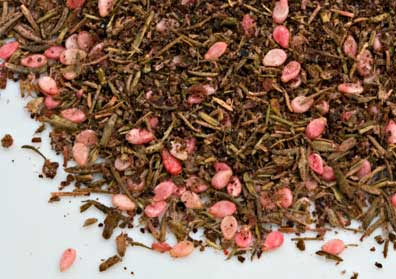
Za'atarZa’atar Herb Blend
Because za’atar has so many uses, I make a lot at one time: 1/2 cup oregano, thyme, and sumac, 1/4 cup sesame seeds, and 1 Tbsp. salt. The sumac, which has a sour taste akin to lemon, is what gives za'atar its red color.

1 part dried Greek oregano, preferably wild-harvested
1 part dried thyme
1 part ground sumac
1/2 part white sesame seeds
Salt to taste

Grind the oregano and thyme in a spice grinder or blender, making sure it’s free of sticks and stems. Put the herbs in a glass jar with a tight sealing lid. Add the sumac, sesame seeds, and salt and shake well to thoroughly combine. Put on the lid and close it tightly. Store away from heat and light.

Za'atar OlivesZa’atar Olives
Made entirely with pantry staples, Za’atar Olives are easy to prepare and make a great last-minute appetizer. Especially when warm, Za’atar Olives are an addictive treat.

2 cups Kalamata olives
1/2 cup olive oil
3 Tbsp. Za’atar Herb Blend (see recipe above)

Rinse the olives and dry them well. Put the olives and olive oil in a small saucepan, bring the olive oil to a simmer, and simmer the olives for 15 minutes. Stir in the Za’atar Herb Blend and simmer for 5 minutes. Serve warm or at room temperature.

Za'atar Bread - Mana'eeshZa’atar Flatbread (Mana’eesh bi Za’atar)
Makes 12 6” flatbreads
When I have breakfast with Marie, an Armenian friend who was born and raised in Beirut, she always serves Mana’eesh, olives, tomatoes, cucumbers, and cheese. Breakfast at Marie’s was my first introduction to za’atar; it's been a part of my repertoire. To make it from scratch, I use my Palestinian friend Salwa’s recipe for pita bread, and top it with Za’atar Herb Blend and olive oil. Although Marie serves this for breakfast, we eat it for a snack, for lunch, or as part of an appetizer spread. If you’re cooking for a small family, like I do, use half the dough for Mana’eesh and the second half for Za’atar pizza (see recipe below).

Dough:
2 1/2 cups lukewarm water
1 Tbsp. yeast (1 packet)
1 tsp. sugar
1 Tbsp. salt
6 – 7 cups all-purpose or bread flour

Topping:
1/2 cup olive oil
1/2 cup Za’atar Herb Blend (see recipe above)

Make the Dough: Place the water in a large bowl. Sprinkle the yeast over the water, sprinkle the sugar on top and let sit for 10 minutes, or until the yeast begins to foam. Mix in the salt and half the flour. Add the rest of the flour one cup at a time, just until the dough holds together. Knead the dough well (either by hand or in a standing mixer), adding flour as necessary until the dough is smooth and shiny. You may need more or less flour than called for in the recipe.

Put the kneaded dough in an oiled bowl to rise, cover the bowl with plastic wrap and a dish towel, and put it in a warm spot. Let the dough rise for 1 hour, or until it has doubled in size.


Preheat the oven to 500°F.

Divide the dough into 12 pieces and pat each piece into a 6” round flatbread. Place the flatbreads on baking sheets with rims; 6 dough rounds fit on a half-sheet pan. Use your fingers to dimple the tops of each flatbread. Let the flatbreads rest for 20 minutes.

Make the Topping: Mix together the olive oil and Za’atar Herb Blend.

Assemble and Bake the Flatbreads: Dimple the flatbreads one more time. Divide the topping between the flatbreads, about 1 Tbsp. each, and spread it evenly over the flatbreads’ tops. Bake the flatbreads, one baking sheet at a time, for 8-10 minutes, or until the flatbreads are golden. Serve immediately.

Note: Mana’eesh can be made ahead and rewarmed just before serving. To rewarm, stack the Mana’eesh, topping side to topping side, and wrap in aluminum foil. Put in a 300°F oven for 5-10 minutes, or until they are warmed through.

Za'atar with LabnehZa’atar with Labneh (Yogurt Cheese)
Makes 3/4 cup

Plain Labneh goes really well with Za’atar Flatbreads. For garlic fans, mix 1-2 cloves puréed garlic into the cheese (an easy way to purée the garlic is with a
standard Microplane rasp grater). Usually, I let the yogurt drain into the sink. If I’m feeling ambitious, I let it drain into a bowl and use the liquid to replace some of the water when I’m making bread dough.

2 cups plain yogurt, preferably whole milk
Pinch of salt
Za’atar Herb Blend (see recipe above)
Olive oil (optional)

Line a strainer with a paper towel. Mix a little salt into the yogurt and dump the salted yogurt into the paper-towel-lined strainer. Let the yogurt drain for 4 hours or overnight.

Spread the yogurt on a plate, sprinkle with Za’atar Herb Blend to taste, and drizzle with olive oil (if using). Serve with crackers, pita chips, or triangles of pita bread.

Za'atar PizzaZa’atar Pizza
Makes 12”-15” pizza
Extra Za’atar Tomato Sauce is a great way to dress up grilled chicken, lamb, or pork (see recipe below); it also may be frozen for future pizzas. The amount of Aleppo or red pepper depends on how spicy you like your food. Pick either Topping#1 or Topping #2 or, if you want to try them both, make the full amount of Za’atar Flatbread dough.

1/2 recipe Za’atar Flatbread dough (see recipe above)

Za’atar Onion Topping (Topping #1):
1/2 cup thinly sliced onions
1/4 cup chopped parsley
2 Tbsp. olive oil
2 Tbsp. Za’atar Herb Blend (see recipe above)
2 tsp. minced garlic
1/4 – 1/2 tsp. Aleppo pepper or 1/8 – 1/4 tsp. crushed red pepper (optional)
1/2 cup crumbled feta cheese

Za’atar Tomato Sauce (Topping #2) (makes enough sauce for 2 pizzas):
1 14.5 ounce can diced tomatoes, preferably fire-roasted
2 tsp. finely minced or puréed garlic
2 Tbsp. Za’atar Herb Blend (see recipe above)
1/2 – 1 tsp. Aleppo pepper or 1/4 – 1/2 crushed red pepper (optional)
1 Tbsp. olive oil
1/2 cup water or white wine
Salt
Freshly ground black pepper
1/2 cup thinly sliced onions
1/2 cup crumbled feta cheese

Shape the Pizzas: Shape the dough into a 12-15” round; the exact size depends on how thick you like your pizza crust. Place the dough on a pizza pan or baking sheet with rims. Use your fingers to dimple the top of the pizza, and let it rest for 20-30 minutes.

Preheat the oven to 500°F.

To Make Topping #1: Mix together all the topping ingredients except the crumbled feta.

To Assemble Pizza with Topping #1: Spread the topping mix over the pizza. Sprinkle the crumbled feta over the topping.

To Make Topping #2: In a saucepan, mix together the tomatoes, garlic, Za’atar Herb Blend, Aleppo pepper, olive oil, and water or wine. Bring to a boil, turn down the heat, and simmer for 15 – 20 minutes, or until the sauce is very thick. Taste and add salt or freshly ground black pepper, as needed.

To Assemble Pizza with Topping #2: Spread half the tomato sauce over the pizza to cover it (use more if you like saucy pizzas). Save any extra tomato sauce for another purpose. Evenly distribute the onions over the tomato sauce and sprinkle with crumbled feta.

Bake the Pizza: Turn the oven down to 450°F. Bake the pizza for 25-30 minutes or until the crust is nicely golden. Serve immediately.
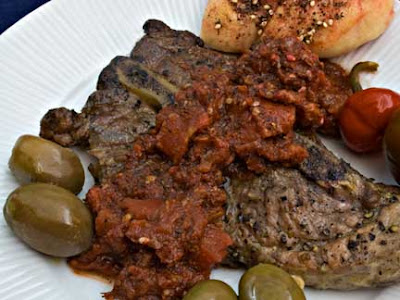
Za'atar Tomato Sauce and Grilled PorkGrilled Pork Steak with Za’atar Tomato Sauce
Serves 4

Za’atar Tomato Sauce goes equally well with grilled lamb or chicken. The sauce is identical to the one used for Za’atar Pizza (see recipe above). For the same reason that brining improves the flavor of pork chops, salting meats well in advance of grilling makes them taste much better. If you can only find large pork steaks, buy 2 and cut them in half.

Meat:
4 pork steaks
Salt
Freshly ground black pepper

Za’atar Tomato Sauce:
1 14.5 ounce can diced tomatoes, preferably fire-roasted
2 tsp. finely minced or puréed garlic
2 Tbsp. Za’atar Herb Blend (see recipe above)
1/2 – 1 tsp. Aleppo pepper or 1/4 – 1/2 crushed red pepper (optional)
1 Tbsp. olive oil
1/2 cup water or white wine
Salt
Freshly ground black pepper

Prepare the Meat: Rinse the steaks and dry well. Season both sides with salt and plenty of freshly ground black pepper. Let sit at room temperature while you make the sauce.

Make the Tomato Sauce: In a saucepan, mix together the tomatoes, garlic, Za’atar Herb Blend, Aleppo pepper, olive oil, and water or wine. Bring to a boil, turn down the heat, and simmer for 15 – 20 minutes or until the sauce is the thickness you prefer. Taste and add salt or freshly ground black pepper, as needed.

Cook the Meat: Grill the pork steak over a medium hot fire or in a grill pan on top of the stove. Turn the meat regularly until it is just done; be careful not to overcook it. Serve immediately with Za’atar Tomato Sauce spooned over.
~~~~~~~~~~~~~~~~~~~~~
This is my entry for
Weekend Herb Blogging, which I am hosting this week at Mediterranean Cooking in Alaska.

Friday, July 25, 2008

Recipe for Salmon "Kleftiko" (Σολομός Κλέφτικος) and Kleftiko: Its Modern Meaning

During the Greek War of Independence against the Ottoman Turks, Klefts were irregular guerilla fighters. Among their many feats, Klefts famously stole sheep and roasted them slowly over buried fires. This trick prevented the Ottomans from smelling meat and finding the guerillas.

Kleftiko is a lamb dish named after the Klefts’ cooking style. Traditionally, the meat was cooked in buried lamb skins or clay pots. In modern versions of kleftiko, lamb, vegetables, and seasonings are wrapped tightly in foil or parchment paper, and slowly cooked in the oven. The meat ends up succulent, with all its flavor sealed inside the packet.

Instead of using lamb, I employed the same closed-container technique to make Salmon Kleftiko. Salmon cooks quickly, so it doesn't need to be cooked at low temperature for a long time, as does lamb.


Salmon Kleftiko is a great dish to make if you’re in a hurry. The packets go together quickly and need bake for only 15 minutes. Even better, there aren’t any pots to clean.

Salmon KeftikoSalmon "Kleftiko" (Σολομός Κλέφτικος)
Serves 6

Foil is easier to work with, but individual parchment paper packets make a more attractive presentation. If using foil packets, plate the salmon and pour the juices over the fish in the kitchen. Parchment paper packets may be delivered directly to the table for individual diners to open (be sure to put an empty plate on the table for discarding the paper packets).


Mediterranean Cooking in Alaska has moved as of March 2011. To read this post please go to


http://www.laurieconstantino.com/cooking-salmon-in-sealed-packets/


Please click on over and visit my new site. Thank you!


Wednesday, July 23, 2008

Summer Doldrums with Recipe for Three Bean and Macaroni Salad with Green Olive Dressing (Φασόλια Σαλάτα με Μακαρονάκι Κοφτό και Πράσινες Ελιές)

Three Bean and Pasta SaladI could come up with a million reasons why I haven’t been blogging. My computer died. Presidential politics captured my attention. Microsoft Vista is the spawn of hell.

All the excuses are true, but the real reason for my absence is that it’s summer in Alaska. The days are long, the garden is gorgeous, and I’m feeling lazy.

The worst part of not blogging is the resulting guilt keeps me from reading my friends’ blogs. Irrational? Definitely. When I was a kid I had to clean my room before I could go out with friends; I learned early that prevarication and deprivation go hand in hand. Now, my need to read favorite blogs has forced me back to the computer.

I'm also backlogged with recipes to write about. Naturally, since I have a giant backlog, I’m ignoring it and writing about the amazing bean and pasta salad I made two days ago.

Generally speaking, I hate pasta salads and think green olives are disgusting. I started making Three Bean and Macaroni Salad solely as a treat for my husband, planning not to eat any of it. But when I tasted the salad for seasoning, I loved it immediately. The dressing is uniquely tangy and delicious, while the beans and pasta balance the dressing’s strong flavors.

Summer Morsels

Our garden greens are growing like crazy and we’ve been enjoying their fresh flavors. I recently made
Plasto, a Greek greens pie with cornbread crust, and enjoyed every bite. If you’re looking for an interesting greens recipe, I highly recommend it.

The salmon run has started and we’ve started restocking our freezer.
Dukkah, an Egyptian spice mix, is great sprinkled over hot-off-the-grill salmon. I also use Dukkah to perk up salmon salad: crumble leftover salmon and mix it with minced onions, minced celery, minced garlic, a little mayonnaise, and a healthy dose of Dukkah. Delicious.

This weekend Costco was selling flats of perfectly ripe figs. Yesterday I quartered and wrapped them in prosciutto for a quick, easy, and addictively good appetizer. If I were alone, I’d have it for dinner.

Three Bean and Pasta SaladThree-Bean and Macaroni Salad with Green Olive Dressing (Φασόλια Σαλάτα με Μακαρονάκι Κοφτό και Πράσινες Ελιές)
Serves 12

Adapted from
Pasta & Co. By Request by Marcella Rosene (Sasquatch Books 1991)
A 10-ounce jar of green olives stuffed with jalapeños has about 25 olives in it. Since the salad is dressed with olive oil rather than mayonnaise, it’s a great salad for bringing to summer potlucks.


1/2 cup dry flageolet beans (or 10 ounces frozen shelled edamame beans)
1/2 cup dry cannellini beans (or 1 15-ounce can cannellini or great northern beans)
1/2 cup dry red kidney beans (or 1 15-ounce can red kidney beans)
2 tsp. salt
8 cloves garlic
40 jalapeño-stuffed green olives or a mixture of jalapeño and plain green olives
3 Tbsp. crushed dried oregano
1 Tbsp. crushed dried thyme
1/4 cup white wine vinegar plus 1-3 Tbsp. as needed
1 cup extra virgin olive oil
1 cup diced red onion, 1/8” dice
1 cup diced celery, 1/8” dice (preferably
leaf celery)
1/2 pound tubetti, mini-penne, elbow macaroni, or other salad macaroni
Salt
Freshly ground black pepper

If using dried beans, spread them out in a pan and inspect carefully, removing any pebbles or debris. Soak the three kinds of dried beans in cold water overnight. Drain the soaked beans and rinse with cold water. Add the soaked beans to a large pot of water, bring to a boil, cover, turn down the heat, and simmer for 30 minutes. Add 2 tsp. salt and continue to simmer until the beans are tender but not mushy. When the beans are done, drain and put them in a large bowl.

If using canned beans, rinse well, drain, and put them in a large bowl. Thaw the edamame beans and add them to the bowl.

While the beans are cooking, pulse the garlic in a food processor to mince. Add the olives, oregano, thyme, and 1/4 cup vinegar, and pulse to mince the olives. Add the olive mix, olive oil, onion, and celery to the beans and mix well.

Bring a pot of salted water to a bowl, add the pasta and cook until the pasta is al dente. Drain the pasta, add it to the beans, season with salt and freshly ground black pepper, and mix well. Taste and add the remaining vinegar, salt, and freshly ground black pepper, as needed.

Serve at room temperature. If plating the salad, serve on a bed of greens.

~~~~~~~~~~~~~~~~~~~~~~~~~~~~~~~~
This is my entry for Heart of the Matter: Picnics hosted this month by Joanna of Joanna's Food.

Monday, January 28, 2008

Recipe: Pork and Chickpea Stew (Χοιρινό με Ρεβίθια)

Viewed from mountaintop pastures, the sun sparkles off achingly blue Aegean waters. Boats travel lazily in and out of the island’s many natural harbors. Hulking shapes of nearby islands grace the horizon.

In spring, wild plants, both edible and inedible, paint the pastures green, briefly disguising rocky earth and thin soil. Bursts of color from showy displays of wild flowers punctuate the bright green vistas. A small valley divides the pastures. Topsoil, deposited over the centuries, supports the valley’s lush plant communities.

By August, the hillsides are painted again, but this time in shades of gold and ochre and rust. The plants, once so green and inviting, are sharp and prickly, attacking the legs of those who venture to cross the land. Rocks are everywhere. Small lizards dart to and fro, hunting for food on the parched hillsides.

Uncle Dimitris used to grow chickpeas in the valley, the only place on the rocky mountaintop capable of sustaining a cultivated crop. He reached the remote area by donkey, and tilled the hard soil by hand. He let the chickpeas dry on the vine, then brought them down to the village for Aunt Stavroula to clean and cook.

During years of poverty, through occupations, wars, inflation, and unemployment, garbanzo beans were an important winter food on the island. They are rich in protein and nutrients, and were particularly valued on the many fasting days that fill the Greek Orthodox calendar.

In this recipe, chickpeas are paired with pork to produce a flavorful and filling winter stew. I’ve made the stew with only chickpeas, leaving out the pork, and it is very tasty - though not as appealing for meat-eaters. When it’s just the two of us, my husband’s serving is heavy on the meat, and my serving is heavy on the chickpeas, a state of affairs that pleases us both.


Pork and Chickpea Stew (Χοιρινό με Ρεβίθια)
Serves 4 – 6

When made with canned chickpeas and tomatoes, both of which work well in this dish, the stew is particularly easy to make. I like the extra flavor boost from oil-cured olives, but the stew is wonderful without them.

1 1/2 pounds pork steak (bone-in) or 1 pork tenderloin (about 1 to 1 1/4 pounds)
Salt
Freshly ground black pepper
2 Tbsp. olive oil
2 1/2 cups diced yellow onions (1/2” dice)
1 Tbsp. minced garlic
2 Tbsp. dried thyme, crushed
1 cup dry white wine
3 cups cooked chickpeas (2 14.5 ounce cans)
2 cups (1 14.5 ounce can) diced tomatoes
1 cup crushed tomatoes
2 cups chicken stock
3 bay leaves
1 Tbsp. minced fresh sage
1/3 cup chopped oil-cured or salt-cured black olives (optional)

Wash and dry the pork well. Cut into 1” cubes, reserving any bones. Season the pork and bones with salt and freshly ground black pepper and, in a large pot, brown on all sides in olive oil. Stir in the onions, lightly season again with salt and freshly ground black pepper, and sauté until the onions begin to turn golden. Add the garlic and dried thyme and cook for 1 minute.

Add the wine, bring to a boil, and cook until the wine is reduced by half. Stir in the chickpeas, diced and crushed tomatoes, chicken stock, and bay leaves. Bring to a boil, cover, turn down the heat to low, and simmer for 45 – 60 minutes, or until the pork is tender.

Remove the cover, stir in the sage and black olives, and bring to a medium boil. Cook the stew, stirring as necessary to prevent it from sticking to the pan, until the liquid is the consistency you desire, about 10 – 15 minutes.

Serve with feta cheese, crusty bread, and a crisp green salad.

~~~~~~~~~~~~~~~~~~~~~~~~~~~~~~~
This is my entry for Weekend Herb Blogging, hosted this week by Claudia from Fool for Food.

Monday, January 14, 2008

Recipes: Artichoke, Tomato, and Olive Stew & Artichoke, Tomato and Olive Pizza (Αγκινάρες και Ντομάτες & Πίτσα με Αγκινάρες, Ντομάτες και Ελιές)

Riana Lagarde of Garlic Breath is one of my favorite food bloggers. She’s an American who lives in the south of France with her daughter and French husband.

Over the last few years, Riana became overwhelmed by the amount of belongings she had (or inherited), so determined not to buy anything for one year, except food. She quit shopping in 2007, and is still going strong. For January 2008, Riana is not even buying food, and instead is living off the contents of her freezer, cupboards, and garden.

Riana’s “slow year” has been fascinating to read about. She’s brewed walnut liquor, preserved tangerines, and made cheese. She’s cured olives, baked cherry pie in her woodstove, made lye,
nixtamaled corn for hominy, and written about all of it in captivating detail.

Riana’s adventures made me think about how much we have and how little we truly need. As a New Year’s exercise, for the month of January, I decided to forego shopping except for essential food items (so far I’ve bought milk, eggs, yogurt, and onions). We get fresh fruit and vegetables every other week from our
Full Circle Farm CSA box. For the rest, I’m relying on my freezers and pantry.

It’s been interesting; not spending money requires a surprising amount of discipline. It’s easier to buy what you want when you want it. It’s harder to figure out alternative ways to get things done. Not shopping has made me pay attention to minor ways I waste for the sake of convenience.

The best part of this month has been working through the food in my freezers. It’s forced me to plan ahead for meals; meat and fish need to be thawed, beans need to be soaked, and bread needs to be made. Instead of dashing to the store for last minute dinner ingredients, I’m using up what we already have.

My current goal is to see air in the refrigerator’s freezer before February. Every day or so I yank open the freezer door and pull out what comes easily to hand. I lie in bed at night thinking about how best to use what I’ve defrosted.

Two days ago a bag of frozen artichoke hearts rose to the top of the freezer’s heap. As I contemplated the artichokes, I knew whatever I made had to help warm my bones. For the last few days the weather has been bracingly cold, -5°F at my house this morning.

In the dark of the night, I decided to make Greek artichoke and tomato stew, spiced up with Aleppo pepper and slivered olives. The next day, when the stew was done, I found myself with extra dough from
my siege of baguette baking. My mind jumped immediately to pizza.

I returned the stew to the burner and simmered it until the sauce reduced to a paste, the perfect consistency for pizza topping. Feta cheese and crushed oregano added the finishing touch to a great vegetarian pizza.

Whether you eat the artichokes, tomatoes, and olives as stew or pizza (or with cheese ravioli, which is how we ate the leftovers tonight), they are a wonderfully warming meal for yet another cold winter day.

Artichoke, Tomato and Olive StewArtichoke, Tomato and Olive Stew (Αγκινάρες και Ντομάτες με Ελιές)
Serves 2 - 3
Frozen artichoke hearts or artichoke quarters work well in braised recipes, especially when they are first lightly browned in olive oil to drive out excess moisture and bring up the flavor. Artichoke, Tomato and Olive Stew takes 30 - 45 minutes to make and is delicious with garlic roasted potatoes on the side. It is good served over pasta, or mixed with tortellini or ravioli. It may also be used to make Artichoke, Tomato, and Olive Pizza (see recipe below). The recipe can be made ahead and easily expanded to feed a crowd. An easy way to pit the olives is to lay them out on a cutting board and smash them with a meat mallet hard enough to loosen the pit but not so hard that you smash the pit into pieces. After smashing olives, the pits pop right out.

1/4 cup olive oil
12 ounces frozen artichoke hearts or quarters, thawed
Salt
Freshly ground black pepper
2 cups diced onions, 1/2” dice
1 Tbsp. minced garlic
1/2 tsp. Aleppo pepper or 1/4 tsp. crushed red pepper (optional)
1 Tbsp. dried thyme, crushed
2 cups, or 14.5-ounce can, diced tomatoes with their juices
3/4 cup dry white wine
1/4 cup pitted and slivered oil-cured or salt-cured black olives
1/4 cup minced parsley

In a sauté pan large enough to hold all the ingredients, heat 2 Tbsp. olive oil. Sauté the thawed artichoke hearts, lightly seasoned with salt and freshly ground black pepper, until they begin to brown. Remove the artichokes from the pan and reserve.

In the same pan, heat the remaining 2 Tbsp. olive oil. Sauté the onions, lightly seasoned with salt and freshly ground black pepper, until they soften and start to turn golden. Stir in the garlic, Aleppo pepper, and thyme and cook for 1 minute. Stir in the reserved artichokes, tomatoes, white wine, and olives and bring to a boil. Turn down the heat and simmer until the sauce begins to thicken, about 20 – 30 minutes. Taste and add salt or freshly ground black pepper, as needed. Stir in the parsley and serve with crusty bread and feta cheese.

Artichoke, Tomato and Olive PizzaArtichoke, Tomato, and Olive Pizza (Πίτσα με Αγκινάρες, Ντομάτες και Ελιές)Makes 1 15-16" pizza
The topping is identical to Artichoke, Tomato and Olive Stew (see recipe above), except the tomato sauce is thicker and feta cheese and oregano are included for added flavor. You can use leftover Artichoke, Tomato and Olive Stew to make pizza sauce by simmering the leftovers until the sauce is reduced to a thick paste. If you have leftover topping from making the pizza, thin it with a little water (or wine) and serve it as pasta sauce.
Ladenia (a traditional Greek "pizza") dough makes a tasty, olive oil-based crust, but you can use any yeast dough for making pizza. Because I had some on hand, I used Old-Fashioned Baguette dough.

1 recipe
Ladenia dough (see below), or 1 pound bread or pizza dough
1 recipe Artichoke, Tomato and Olive Stew (see above)
1/2 cup crumbled feta cheese (optional)
1/4 tsp. oregano

Ladenia dough:
1 cup warm water
2 1/4 tsp. dried yeast (1 packet)
1 tsp. salt
1/4 cup olive oil
2 3/4 – 3 1/4 cups all-purpose flour
Olive oil for oiling pan

Make the dough: Put the warm water in a large bowl and sprinkle it with dried yeast. Let sit for 10 minutes while the yeast begins to work. Mix in the salt and olive oil. Stir in the smaller amount of flour, and add enough of the remaining flour to form slightly sticky dough. Adding flour as necessary, knead the dough until it is smooth, elastic, and no longer sticky. (Kneading the dough in a stand mixer makes the task quick and easy.)

Liberally oil the bottom of a 15 - 16” round pan (or a 12” x 14” roasting pan) with olive oil. Start stretching the dough with your hands, and put it into the pan. Press the dough out until it fully covers the pan’s bottom. If some of the olive oil oozes onto the dough, use it to lightly oil the top. Cover the pan with a dish cloth or plastic wrap and set it aside to rise in a warm place until the dough has doubled in size (about 1 hour).

Make the topping: Follow the recipe for Artichoke, Tomato and Olive Stew (above), but simmer the stew until it is reduced to a thick paste, 40 – 45 minutes. Watch carefully near the end of the cooking time and stir regularly to prevent the topping from sticking to the pan and burning. Remove from the heat.

Make the pizza: Preheat the oven to 400°F.

When the dough has finished rising, use your fingertips to make little indentations all over it. Evenly spread the topping over the dough, making sure the artichokes are evenly distributed. (It’s better to have leftovers than to overload the dough with topping.) Sprinkle the feta over the topping and the crushed oregano over everything.

Bake for 40 – 50 minutes, or until the sides of the pizza are browned and the dough is cooked through.

Cut into pieces and serve warm, cold, or at room temperature.

~~~~~~~~~~~~~~~~~~~~~~~~~~~~~~~~~~

This is my entry for Hay Hay it's Donna Day: Pizza hosted this month by 80 Breakfasts.

Monday, December 31, 2007

Recipes: Fig Tapenade, Garlicky Goat Cheese Spread, and Garlic Croutons

When I was shopping for Christmas Eve dinner, I spied a tempting display of organic dried fruits. I succumbed to the call of black mission figs, and brought home a large bag. When the time came for holiday entertaining, I turned to the figs.

Several months ago, I’d read a recipe for fig and olive tapenade. I love tapenade, a Provençal paste of black olives, anchovies, capers, herbs, garlic, lemon, and olive oil, so decided to pair it with my bounty of figs. Unfortunately, I couldn’t remember where I’d read about fig tapenade, a distressing complication of owning too many cookbooks.

I did find a few recipes for tapenade with figs on the internet, but either the ingredient list or procedure didn’t appeal to me, so I was stuck with creating my own version. I started with a basic tapenade, left out the anchovies, and added figs and a healthy dose of wild thyme.

The sweet figs and salty olives and capers combine to form a deliciously vibrant spread. I made it this morning, enjoyed Fig Tapenade and Rosemary Bread for lunch, and brought the rest to a New Year’s Eve party tonight.

The best thing about Fig Tapenade is how easy it is to make. The ingredients are simply tossed into the food processor and processed until smooth. The flavor comes from good ingredients, not hard work on the part of the cook.

Fig Tapenade is rich and flavorful. It can be served on its own with crusty bread, or dressed up, as I did tonight, with Garlicky Goat Cheese Spread and Croutons.


Fig Tapenade
Makes about 2 cups
Although it may be tempting to buy pitted olives, their flavor pales in comparison to that of olives with pits. To easily pit Kalamata olives, spread them out on a cutting board and smash each olive with a meat pounder or other heavy object. After being pounded, the pits slip right out of the olives.

1 cup dried black mission figs
1 1/2 cups Kalamata olives
2 Tbsp. capers, preferably salt-cured
1 Tbsp. dried thyme, crushed
1 Tbsp. minced fresh rosemary
1 Tbsp. chopped garlic
3 Tbsp. lemon juice
1/2 tsp. salt
1/2 tsp. freshly ground black pepper
1/2 cup olive oil

Cut any stems off the figs, and cut the figs into quarters. Rinse, drain, and dry the olives and capers. Remove the pits from the olives.

Place all the ingredients, except the olive oil, in a food processor, and process until the ingredients are chopped into small pieces. While the machine is running, pour in the olive oil and continue processing until the ingredients form a smooth paste. Scrape down the sides of the bowl and process again. Place in a glass container and refrigerate for at least 3 hours before serving.

Garlicky Goat Cheese Spread
Makes 2 cups
If you prefer mild hints of garlic, use the smaller amount; bolder palates may prefer the full measure. Garlicky Goat Cheese Spread may be served in a bowl, or unmolded onto a platter. If you want to serve it unmolded, line a bowl large enough to hold the spread with plastic wrap. Spoon the spread into the plastic-lined bowl, press down to remove any air pockets, and cover the spread with plastic wrap. To unmold, open up the plastic wrap so the spread is exposed, invert the bowl onto a platter, then remove the bowl and plastic wrap.

1 – 3 cloves garlic
1/2 tsp. salt
1 cup (8 ounces) chèvre (soft goat cheese)
1/2 cup mascarpone or cream cheese
1/2 cup whole-milk yogurt or sour cream

Puree the garlic by mashing it together with the salt either in a mortar and pestle or on a cutting board with the flat side of a knife blade. Mash the pureed garlic, chèvre, mascarpone, and yogurt together (this may be done in a food processor). Refrigerate for at least 3 hours before serving.

Garlic Croutons
1 clove garlic, minced
1/4 cup olive oil
1/4 cup butter, melted
1/4 tsp. salt
2 baguettes, cut into thin slices

Preheat the oven to 325°F. Mix all the ingredients together in a small bowl. Brush the garlic butter-oil mixture onto one side of each baguette slice. Put the buttered baguette slices in one layer on a baking sheet and cook for 10 – 15 minutes, or until the bread slices are crispy.
~~~~~~~~~~~~~~~~~~~~~~~~~~~~~~~~~~
This is my entry for A Fruit of the Month: Dried Fruit hosted by The 'Yum' Blog. It is also my entry for Antioxidant Rich Foods/5-a-Day Tuesdays sponsored by Sweetnicks.

Friday, November 2, 2007

Recipe: Fig, Lemon, Olive, and Rosemary Cookies

Fig and Olive CookiesWhen I have insomnia, a not infrequent occurrence, I lie in bed cataloging the contents of my refrigerator. I plan and replan how I can use the available food. As a result, I am the queen of leftovers; my midnight musings often result in new creations, with the leftovers being just one among many flavorful ingredients.

Last week, my CSA box from Full Circle Farm contained lovely, organic, black Mission figs from California. I ate some fresh, and used others in an excellent grilled cheddar cheese sandwich. When insomnia next struck, my mind turned to the figs left in the refrigerator.


Mediterranean Cooking in Alaska has moved as of March 2011. To read this post please go to


http://www.laurieconstantino.com/kitchen-creativity-how-to-use-fresh-figs/


Please click on over and visit my new site. Thank you!