Showing posts with label ingredient. Show all posts

Friday, September 24, 2010

Rabbit Recipes: Litsa's Rabbit and Onions & Froso's Wine-Marinated Rabbit with Onions and Potatoes (Κουνέλι της Λίτσας & Κουνέλι της Φρόσω)

In Greece, our village’s economy depends on wheat and barley farming. In the last 10 years, rabbit populations have spun out of control, ravaging newly sprouted fields, and destroying entire seasons worth of crops. As a result, local hunters work diligently to keep the rabbit population in check, sharing their bounty with fellow villagers.

In September, rabbit is common village fare. Last week, two of my friends, excellent village cooks, served braised rabbit for dinner, but cooked it different ways. I decided to try both their recipes. Both were delicious; I’ll make each recipe again.


Litsa’s Rabbit and Onions (Κουνέλι με Κρεμμύδια της Λίτσας)
Serves 4
The sweetness of onions and Litsa’s light spicing combine with wine and meat juices to form a wonderfully flavorful sauce for rabbit. Our guests were sucking bones, licking fingers, and cleaning plates with bread to capture every bit of the delicious sauce. Chicken may be substituted for rabbit.


Froso’s Wine-Marinated Rabbit with Onions and Potatoes (Κουνέλι Μαριναρισμένο σε Κρασί με Κρεμμύδια και Πατάτες της Φρόσω)
Serves 4
Froso’s deeper, richer spicing gives a more sophisticated, slightly Middle Eastern edge to rabbit’s simple clean taste. Taking bites of meltingly soft onions and rabbit together elicited sighs of pleasure from diners, who smashed the potatoes into sauce to maximize flavor. By using only a small piece of cinnamon, Froso prevents its flavor from dominating the rabbit. Froso says marinating rabbit for 2 days is best, however, 24 hours is sufficient. Use slightly waxy potatoes like Yukon golds or red potatoes, not Russets or baking potatoes which tend to fall apart when braised with meat. The small onions used in this recipe should be about 1 1/2” in diameter, nor pearl onions. Chicken may be substituted for the rabbit, in which case, marinate the chicken for 12-24 hours.


Mediterranean Cooking in Alaska has moved as of March 2011. To read this post please go to


http://www.laurieconstantino.com/two-simple-recipes-for-cooking-rabbit/


Please click on over and visit my new site. Thank you!


Sunday, June 27, 2010

A 2 Part Tale of 2 Plants in 2 Countries with 2 Recipes: Purslane-Tomato Salad (Ντομάτα Σαλάτα με Γλιστρίδα) and Beach Lovage-Tomato Salad/Salsa (Ντομάτα Σαλάτα με «Άγριο Σέλινο»)

Introduction

In Greece, friends and relatives are endlessly curious about Alaska. We’re quizzed about daylight, animal life, cost of living, how many thousand miles we live from family. Every exotic Alaskan detail is examined and catalogued.

Back in Alaska, a vast land peopled largely by recent transplants, we describe life on a Greek island in a small village filled with relatives (family roots on the island go beyond reach of transmitted memory). We divert Alaskans with stories of family intrigues, open-handed generosity, and island bureaucratic snafus.

Greece and Alaska could not be more different. Yet, in both places, I shop for groceries, forage for wild edibles, and cook with abandon.

A friend of mine recently asked whether a dish cooked in a Greek kitchen tastes the same when made in Alaska. The simple answer: no.  The same recipe tastes different in Greece and Alaska because the ingredients aren’t the same in the two places.

For example: Greek tomatoes have more flavor, as do Alaska spinach and lettuce. Wild greens available in Greece don’t grow in Alaska and vice versa. American and Greek flour, butter, and eggs all bake up differently. Similar differences are found with virtually every ingredient. In both countries, I use the same basic recipes, but the results always vary, sometimes slightly, sometimes significantly.

No matter where one cooks, the key to a good result is tasting what you are making as you are make it. No one should ever blindly follow a recipe (even mine), no matter how trusted the source. The flavors of vegetables, herbs, spices, meats, cheese, fruits, you name it, all change subtly from purchase to purchase and day to day. The only way to compensate for these changes, and to generally adjust a recipe to please your palate, is to taste.

Two articles with recipes follow that illustrate this point. Part One was written in Greece last summer. It’s about purslane, Portulaca oleracea, a weed growing rampant in much of the world (including North America, but not Alaska). I combined the purslane with tomato to make a cooling salad.

Part Two is about a recent gathering expedition for beach lovage, Ligusticum scoticum, in Alaska. Using the Greek Purslane-Tomato Salad as the starting point, I tweaked the flavors to accommodate my Alaskan ingredients.  I served Beach Lovage-Tomato Salad with grilled king salmon; loaves’ herby freshness and the salad’s tart dressing nicely complimented king salmon’s richness.


Part One: Purslane-Tomato Salad in Greece

For years, our yard in Greece was a wasteland of weeds.  Every year on arrival we whacked down the tangle and borrowed a truck to haul away several loads of debris.

Our messy yard contrasted sharply with the carefully tended gardens of family, friends, and neighbors. Cousin Effie has an especially green thumb.  Most of her yard is paved over, but her narrow strip garden holds an impressive collection of flowering plants.

A couple years ago, Effie was sighing over her lack of a vegetable garden.  Since she lives only a few blocks away, and we are in Alaska for most of the year, we suggested she use our yard.

Now, when we arrive in Greece, we open the gate to a healthy, green garden, both decorative and edible, instead of a jungle. We planted roses and a bottle brush tree.  Effie and cousin Tzani have surrounded them with smaller, flowering plants. Blue jasmine from Tzani and a sweet-smelling white-flowered vine climbs the neighbor’s wall. What were tiny rosemary starts are now bushes.

This year the vegetable garden includes eggplant, okra, green beans, summer squash, tomatoes, mint, and celery.  The eggplants are heavily laden with fruit.  We pick them only when it’s time to cook (or gift eggplants); their texture and flavor are dramatically better than any supermarket eggplant available in Alaska.

While in the village, we take over weeding and watering the garden.  This year, purslane and crab grass were the most dominant weeds. While crab grass is purely an annoyance, purslane makes a tasty edible green.

Purslane has been used in Greece throughout recorded history.  Hippocrates, Galenus, and Dioscurides documented its many medicinal uses.  In the kitchen, it’s used raw in salads, mixed with yogurt, added to soups, served with meat or fish, and pickled for winter salad.

In Greece, purslane is best harvested by June or July, at which time both stem and leaves can be used. In September, stems are too tough to eat, but leaves still taste great.

This year, our first day back on the island, we drove to the main town to shop for basics. The day was a scorcher; we returned home hot and tired.  I wasn’t in the mood to cook and, after a day spent under the relentless Greek sun (at least to an Alaskan), didn’t want to eat more than a salad.

While I cut vegetables, Steve collected a colander full of purslane from the garden. Its succulent, slightly sour leaves, combined with sweet tomatoes and tart lemon juice, made a refreshing salad, perfect for a hot day.

Purslane-Tomato Salad (Ντομάτα Σαλάτα με Γλιστρίδα)
Serves 2 – 4
If you don’t have fresh purslane, see the recipe below for Beach Lovage Salad and follow the recommended substitutions there for a fresh, cooling summer salad.

Dressing:
1/4 cup extra virgin olive oil
2 Tbsp. fresh lemon juice
Salt
Freshly ground black pepper

Salad:
1 1/2 cups diced tomatoes, 1/2” dice
1 1/2 cups cleaned purslane leaves
3/4 cup diced cucumbers, 1/2” dice
3/4 cup diced red onions, 1/2” dice
1/4 cup minced fresh parsley
1 Tbsp. minced fresh mint

Make the dressing: Whisk the olive oil into the lemon juice. Season with salt and freshly ground black pepper to taste.

Make the salad: Toss all the ingredients together. Drizzle with the dressing and toss again. (You may not need all the dressing.) Taste and add salt or freshly ground black pepper, as needed.

Beach Lovage and Chocolate Lilies

Part Two: Beach Lovage-Tomato Salad in Alaska

Nearing the spring equinox, by June’s second week Anchorage was enjoying almost 20 hours of daylight. Winter doldrums were a distant memory; the whole town was in a good mood.

Sunday we woke early. Sun streamed in the window, warming our faces. The sky was clear bright blue. Staying in bed wasn’t possible. We headed out to find a beach where we could harvest wild plants.

After making the circuit of possible foraging sites, we finally came across a field of beach lovage (Ligusticum scoticum).  Also known as Scotch lovage, sea lovage, wild celery, and petrushki, beach lovage grows on sandy beaches along the coasts of Alaska, Canada, and the Northeastern United States.

Beach lovage is easy to identify with its three-lobed leaflets and smooth, reddish-purple stem.  It’s best harvested before flowering.

One caution: Beach lovage is in the Umbelliferae family and its flowers are similar to those of relatives like carrots, parsley, and dill. However, water hemlock, a poisonous plant is also in the Umbelliferae family, and has similar flowers but very different leaves. As with all wild foraging, be certain you know what you’re gathering and be sure to follow the forager’s primary rule: “when in doubt, throw it out.”

The flavor of fresh beach lovage is unique and wonderful. The closest approximation would be to mix celery, parsley, and a little lemon zest, but there is still a missing flavor, the hint of wild bitterness that makes beach lovage special.

Although the flavors of purslane and beach lovage are not at all the same, both have a tart freshness that can't be purchased in a supermarket. As I tossed about ideas for using the beach lovage, I kept thinking about the Purslane-Tomato Salad we'd had last summer. With that in mind, I started mixing and tasting, adding cucumbers, then more mint, then more lemon juice, a little of each at a time, until the balance of flavors was correct for beach lovage - and for our palates.

In the last two weeks, I’ve used beach lovage in a risotto that was devoured by guests, a lovely topping for pan-fried halibut, and delicious halibut cakes.  The best way I served beach lovage was in the modified version of my Greek Purslane-Tomato Salad.

Beach Lovage-Tomato Salad/Salsa (Ντομάτα Σαλάτα με «Άγριο Σέλινο»)
Serves 4 as a salad, or 8 as salsa for serving with fish
If you don’t have beach lovage, substitute 1/4 cup minced parsley, 1/4 cup minced celery leaves, and 1/2 tsp. finely grated lemon zest (or 3 Tbsp. minced parsley, 1 Tbsp. minced lovage, and 1/2 tsp. finely grated lemon zest).

Dressing:
1/4 cup extra virgin olive oil
3 Tbsp. fresh lemon juice
Salt
Freshly ground black pepper

Salad:
1 1/2 cups diced tomatoes, 1/2” dice
1 1/2 cups diced cucumbers, 1/2” dice
3/4 cup diced red onions, 1/2” dice
1/2 cup minced fresh beach lovage leaves
3 Tbsp. minced fresh mint

Make the dressing: Whisk the olive oil into the lemon juice. Season with salt and freshly ground black pepper to taste.

Make the salad: Toss all the ingredients together. Drizzle with the dressing and toss again. (You may not need all the dressing.) Taste and add salt or freshly ground black pepper, as needed. 
~~~~~~~~~~~~~~~~~~~~~~~~~~~~~

This post is included in Weekend Herb Blogging compiled by Chris from Mele Cotte.

Sunday, April 19, 2009

Recipes: Home-Cured Flat Pancetta & Edamame and Mushroom Risotto with Pancetta

Bacon’s smell wafting through the air is so enticing that even committed vegetarians are sometimes tempted to stray from their virtuous path. These days I mainly use bacon and pancetta as flavor-boosting ingredients; it’s been years since I ate it on its own.

Since I use bacon to boost flavor, I buy the best available. So I was intrigued to read on
Kits Chow, that Christine’s Home-Cured Bacon was so good, her husband asked her not to buy bacon from the store anymore. I had to try it.

Although I’ve visited
Kits Chow more than once over the past year, I was there recently because I was paired with Christine for March’s Taste and Create. Invented by Nicole of For the Love of Food, Taste and Create is one of my favorite food writing events. Every month Nicole pairs participating food writers; each is responsible for trying one recipe from the other’s blog and writing about it.

Some months it can be a challenge to find something I want to write about on my partner’s blog (although I’ve always found something delicious to make). Other months there’s an abundance of recipes I can’t wait to try; this was an abundant month. I haven’t made it yet, but Christine’s simple
Ginger Custard will appear on our table shortly after I next go shopping.

Christine writes from an Asian perspective, while I focus on Mediterranean foods, but there are many similarities in our cooking styles. We both emphasize foods made with fresh, locally available products, and enjoy making ingredients from scratch.

Christine shares my passion for creating variations on a theme. For example, she recently wrote about and photographed a
series of grilled cheese sandwiches; every time I look at this post, I crave an immediate grilled cheese fix. I also appreciate Christine’s creative Asian-Hellenic fusion cooking.

But back to the bacon.

Christine used a
Hugh Fearnley-Whittingstall recipe from the Guardian to make her bacon. The recipe is simple: pork belly is liberally coated with a dry-rub of salt, sugar, and spices, and then cured in the refrigerator for several days.

The result was delicious: meaty, juicy, and mouth-watering. I’m calling it flat pancetta rather than bacon because it isn’t smoked (a hallmark of American bacon). And since I renamed it pancetta, I used the meat to flavor a wonderful risotto made with edamame beans and garlicky sautéed mushrooms. I’m only sorry there isn’t any leftover risotto; writing the recipe has left me wanting more.

Homemade PancettaHome-made Flat Pancetta
Adapted from
Hugh Fearnley-Whittingstall via Kits Chow
The original recipe recommended curing the meat at least 4 days, or as long as 10, draining the juices and applying more cure every 24 hours. I stopped the process on the fourth day because the pancetta was getting too salty for my taste. Since I cured it for shorter than called for in the original recipe, and because the recipe doesn’t include nitrites or nitrates, I froze all the pancetta I didn’t use right away rather than worrying about spoilage. The best place to buy meaty pork belly is in Asian markets (in Anchorage, Sagaya is the best source). Be sure to look the pork over carefully and buy the meatiest piece you can find. Once, in desperation, I bought a frozen piece of pork belly wrapped in freezer paper. The butcher repeatedly assured me the meat was skin-on; it wasn’t, plus the “meat” was 90% fat. The fault was my own for buying meat sight unseen.

Curing mix:
2 Tbsp. black peppercorns
2 Tbsp. coriander seeds
1 tsp. juniper berries
5 bay leaves
1 1/3 cup kosher salt (3/4 pound)
3/4 cup (packed) brown sugar (1/4 pound)

2 pieces meaty pork belly, with skin, 1 1/2 – 2 pounds each

Make the Curing Mix: Grind the peppercorns, coriander seeds, juniper berries, and bay leaves in a spice grinder, or pound them in a mortar and pestle until they are finely crushed. Mix the ground spices with the salt and brown sugar.

Curing Pancetta - Day 1Day 1: Rub each piece of pork belly with the curing mix until the meat is well coated and every nook and cranny is covered with the mix. Put the meat in a glass or other non-metallic container. Cover with plastic wrap and refrigerate.

Curing Pancetta - Day 2Day 2: After 24 hours, pour off all the liquid that has leached out of the pork and rub the meat with more curing mix until it is once again well coated.

Day 3: Repeat Day 2.

Day 4: Rinse off all the cure under cold running water. Dry the meat very thoroughly. Wrap in wax paper, parchment paper, or cheesecloth and refrigerate or freeze until ready to use (before choosing storage method, read the above headnote).

Edamame and Mushroom Risotto with PancettaEdamame and Mushroom Risotto with Pancetta
Serves 4
The mushrooms need to be sautéed in batches to ensure they brown properly; if you try to brown all the mushrooms at one time, they’ll steam rather than brown. Because home-cured pancetta can be salty, be sure to lightly salt the mushrooms or the finished dish may be too salty (the mushrooms need some salt to ensure they cook properly). Pancetta is often sold in packages of very thinly cut pre-sliced meat. Although I use pre-sliced pancetta in a pinch, I mostly buy pancetta direct from the deli counter (if I’m not making my own at home). I ask for either a chunk of pancetta, which I hand slice and dice at home, or have the deli staff cut the pancetta into slices the thickness of thick bacon. With thicker slices, eaters enjoy bursts of pancetta flavor when devouring the risotto; thinner slices tend to melt into the other flavors.

Mushrooms:
1/2 pound fresh cremini mushrooms, cut in 1/4” slices (about 2 cups sliced)
1/2 pound fresh shiitake mushrooms, stems removed and cut in 1/4” slices (about 2 cups sliced)
2 Tbsp. butter, divided
2 Tbsp. olive oil, divided
Salt
Freshly ground black pepper
1 Tbsp. minced garlic, divided

Risotto:
3/4 cup diced home-cured or store-bought pancetta (rind removed), 1/4” dice
2 Tbsp. olive oil
1 1/2 cups diced onions, 1/4” dice
Freshly ground black pepper
1 1/3 cups Arborio rice
1 cup dry white wine
10 ounces shelled edamame beans, blanched if fresh or thawed if frozen
6 Tbsp. minced fresh mint, divided
6 – 7 cups vegetable or chicken stock
1 cup freshly (and finely) grated parmesan cheese

Cook the Mushrooms: Sauté the cremini mushrooms, lightly seasoned with salt and freshly ground black pepper, in 1 Tbsp. butter and 1 Tbsp. olive oil, until the mushrooms are nicely browned. Stir in half the garlic and cook for 1 minute. Remove the browned mushrooms from the pan with a slotted spoon and set aside. Repeat with the shiitake mushrooms, using the remaining olive oil, butter, and garlic.

Make the Risotto: In a sauté pan large enough to hold the finished risotto, sauté the pancetta until the fat renders and the pancetta begins to brown. Stir in the onions, lightly seasoned with freshly ground black pepper, and sauté until the onions soften and begin to turn golden. Stir in the rice to completely coat it with oil and cook, stirring, for 1 minute. Add the wine, bring to a medium boil, and cook, stirring, until the wine is almost all absorbed.

Add 1/2 cup of stock and cook over moderate heat, stirring constantly, until the stock is almost all absorbed. Keep adding stock, 1/2 cup at a time, and stirring until each addition of stock is almost absorbed. When the rice is half done, stir in the edamame beans and 5 Tbsp. mint. (The recipe can be made ahead to this point, and finished right before serving. If you make it ahead, after you take the rice off the burner, stir it until it cools down before adding the edamame and mint.)

Continue adding stock, 1/2 cup at a time, and stirring until the rice is tender, but still firm in the center (this takes 18 – 22 minutes total). There may be stock left over. Stir in the reserved mushrooms, remaining 1 Tbsp. mint, and 1/2 cup grated parmesan. If necessary, add stock until the risotto is the consistency you desire; it should be moist and creamy, not thick and dry. Taste and add salt and freshly ground black pepper, as needed.

Serve immediately with the remaining grated parmesan on the side for sprinkling on top.
~~~~~~~~~~~~~~~~~~~~~~~~~~~~~
This is an entry for My Legume Love Affair – 9th Helping (MLLA9), created by Susan of The Well-Seasoned Cook, which I hosted in March 2009. My Legume Love Affair - 10th Helping for April 2009 is being hosted by Courtney of Coco Cooks.

Ingredient: Tepary Beans with Recipe for Tepary Bean and Vegetable Stew

The snow in our front yard is nearly gone, the ice in the pond has melted, and spring is quickening. After our difficult winter, I’m looking forward to seasonal change even more eagerly than usual.

Speaking of winter, the overwhelming support from the blogging community during my father’s long illness and ultimate death was much appreciated. It’s not easy to lose a parent, but the kindness and concern shown by so many helped. Thank you all so much.

Because I spent so much of the winter in Washington near my parents, I was able to see my sister regularly, to my great joy. Though we’re two years apart and have the closeness that comes from childhood bedroom-sharing, as adults we’ve always lived far away from each other. It was indescribably soul-satisfying to have her (and her husband and dogs) be part of daily life the last few months.

Shopping for food and cooking dinner with my sister brought new life to what too often are routine activities. Despite our years apart, we’ve developed similar cooking styles and work together smoothly and easily in the kitchen.

One of the projects we undertook was finding and cooking tepary beans for My Legume Love Affair Ninth Helping. Despite searching in numerous Seattle area stores, we were unable to find tepary beans and resorted to ordering them
online. When they arrived, we made Tepary Bean and Vegetable Stew and loved it. I’ll definitely be cooking with tepary beans again.

Tepary Beans

Tepary beans (Phaseolus acutifolius) are a bush bean originating in the desert areas of Mexico and the American Southwest. They grow best in extreme heat and under very dry conditions. Tepary beans’ taproot is twice as long as common beans’ (Phaseolus vulgaris), which allows teparies to efficiently take advantage of even small amounts of soil moisture.

Nutritionally, tiny tepary beans (1/4” long, the size of large lentils) are higher in protein, iron, calcium, and fiber than most beans. Their nutritional benefits, sweet, nutty flavor, and relatively quick cooking time make teparies well worth searching out.

Jay Bost, in the
June 2006 Seeds of Change newsletter, wrote a fascinating article about tepary beans. His discussion of the growing conditions under which teparies thrive makes me interested in trying them in Greece, which has the necessary hot dry summers:

“Due to its native habitat in the Sonoran Desert, domesticated tepary beans … are considered by many to be the most drought-tolerant annual legume in the world. They are capable of producing a harvest of beans with a single rain in the harshest conditions; when irrigated, they produce higher yields only up to a certain point, after which excess moisture becomes a detriment and leads to overproduction of foliage and low bean production. In fact, it appears that moisture stress is necessary to trigger fruiting. Part of the tepary bean's secret to success in dry areas is to grow quickly when water is available. While pinto beans take 90 to 120 days to maturity, teparies take only 75 to 85. As water shortages become a reality in many parts of the U.S. and around the world, teparies will undoubtedly play an important role in dryland agriculture. In fact, tepary cultivation is now taking place in dry areas of Africa and is being revived in southern Arizona.”


Bost details teparies’ nutritional benefits:

“Part of the tepary bean's appeal, in addition to its drought tolerance, is its superior nutritional content. It has a higher protein content (23–30%) than common beans such as pinto, kidney, and navy, as well as higher levels of oil, calcium, iron, magnesium, zinc, phosphorus, and potassium. While higher in all of these desired nutrients, tepary beans are lower in polyunsaturated fat and in the anti-enzymatic compounds which make common beans hard to digest (Hamama and Bhardwaj 2002). … Tepary beans are proving to be an ideal food for people prone to diabetes or suffering from diabetes owing to the beans' high fiber level, which make them a "slow-release food"; that is, tepary beans' sugars are released slowly and steadily, rather than in a spike as in many high carbohydrate, low fiber foods common in our diets.”


The
Ark of Taste is a list of endangered food plants and animals that the Slow Food Foundation for Biodiversity seeks to protect and defend. Tepary Beans are now on the Ark of Taste list for the United States.

I can’t wait to start playing around in the kitchen with tepary beans, and hope to soon convince a local store to carry them!


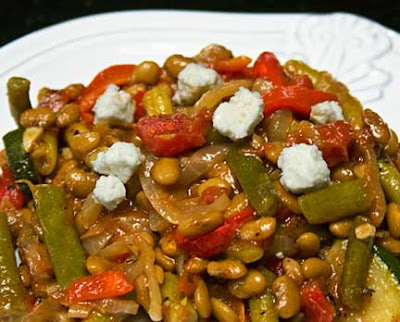
Tepary Bean and Vegetable StewTepary Bean and Vegetable Stew
Serves 4
Adapted from Heirloom Beans by Steve Sando and Vanessa Barrington (Chronicle Books 2008)
Tepary beans’ firm texture and sweet flavor pair well with most vegetables. This stew includes peppers, green beans, zucchini, and tomatoes, all of which, like tepary beans, originate in the Americas. I roast red peppers directly over a gas burner while the beans are cooking, put them in a closed paper bag until cool (which makes them easier to peel), remove the charred skin with my fingers (don’t use water; it’ll take away too much flavor), and cut them into thin strips. The sweet bean and vegetable stew is perfectly set off by best-quality, sharp, salty feta cheese from Greece.

1/2 pound dried tepary beans
Water
3 cups diced onions, 1/2” dice (1 large onion)
1/4 cup olive oil, divided
Salt
Freshly ground black pepper
2 Tbsp. minced garlic
1 14.5-ounce can diced tomatoes, preferably fire-roasted
1/2 pound green beans, trimmed and cut into 1” lengths (4-5 cups)
1 large zucchini, cut in half lengthwise and then diagonally into 1/4” slices (4 cups)
2 tsp. minced fresh thyme
2 red bell peppers, roasted, cut into strips and then in half
4-6 ounces best quality feta cheese, crumbled, for garnish

Spread out the tepary beans in a flat pan and inspect carefully, removing any pebbles or debris. Rinse well with cold water. Put the beans in a large pot with enough water to cover them by 3 inches. Bring to a boil, and cook for 5 minutes. Cover and turn off the heat. Let sit for at least one hour. (NOTE: Next time I cook tepary beans, I’ll try eliminating this step; I suspect tiny teparies don’t need pre-soaking or pre-cooking.)

Bring the tepary beans and their liquid back to the boil (do not discard the original water). Turn down the heat, and simmer for 1 – 2 hours, or until the beans are just tender and not at all mushy.

In a separate pan, sauté the onions, lightly seasoned with salt and freshly ground black pepper, in 2 Tbsp. olive oil until the onions soften and start to turn golden. Stir in the garlic and cook for 1 minute. When the tepary beans are done simmering, scrape the onions, garlic, and oil into the bean pot. Stir in the tomatoes and green beans. Bring to a boil, cover, turn down the heat, and simmer for 15-20 minutes or until the green beans are tender.

While the green beans are cooking, using the same pan in which the onions were cooked, sauté the zucchini, lightly seasoned with salt and freshly ground black pepper, in olive oil. Cook until the zucchini browns lightly and begins to soften. Turn off the heat and stir in the thyme.

When the green beans are tender, scrape the zucchini, thyme, and their oil into the bean pot. Stir in the roasted red pepper pieces. Simmer for 5 minutes.

Serve hot, garnished with crumbled feta.
~~~~~~~~~~~~~~~~~~~~~~~~~~~~~
This is an entry for
My Legume Love Affair – 9th Helping (MLLA9), created by Susan of The Well-Seasoned Cook, which I hosted in March 2009. My Legume Love Affair - 10th Helping for April 2009 is being hosted by Courtney of Coco Cooks.

Friday, February 27, 2009

All About Za'atar with Recipe for Za'atar Herb Blend and 5 Recipes for Using Za'atar

Za'atar Bread and LabnehIf za’atar is within reach, anyone can make delicious food at the drop of a hat. The possibilities are endless: Za’atar Olives, Za’atar and Labneh, Za’atar Tomato Sauce with Grilled Meat, Za’atar Bread, and Za’atar Pizza are only a few ways to use this versatile ingredient. I almost have my Za'atar Chicken recipe ready to post.

Za’atar is
valued for more than great taste. “Who for forty days eats powdered dried leaves of za'tar fasting can be harmed by no serpent.” If the worst happens and you’re bitten by an asp or stung by a scorpion, za’atar cures “the bitings and the stings of venomous beasts." A Bethlehem proverb teaches, “Thyme and oil lead to the prosperity of the home.” Even more importantly, “eating za'atar improves your memory and makes you more intelligent.”

So what is za’atar?
A. An herb blend
B. Savory
C. Thyme
D. Oregano
E. Biblical hyssop
F. All of the above

The answer is “(F) All of the above.”

Za’atar (ZAHT-ar) is a class of herbs, and includes members of the thyme, oregano, and savory families. Za’atar is also a Middle Eastern herb blend, containing one or more of the za’atar herbs. As with many centuries-old dishes, za’atar blend has many regional and familial variations.

Disparity in za’atar’s spelling is pervasive; za’atar, za’tar, zatar, zahtar, satar, zahatar, and za’ater are all used. The spelling confusion is easy to explain. Za’atar is an Arabic word (الزعتر). Like Greek and other languages that don’t use the Roman alphabet, Arabic is inconsistently transliterated into English.

Some experts claim the herb za’atar is only one specific type of savory; others claim with equal vehemence it’s one specific type of oregano. Both may be right, but only for the region or family they’re writing about.

No matter its local or historical usage, “za’atar” has come to be a generic term used in the Middle East for a group of similarly-flavored members of the herb genus
Lamiaceae. Za’atar herbs grow in the same habitat and have similar appearances. These practical factors may have led Middle Easterners to use one word for all the plants.

Linguistic confusion over “za’atar” is not unique to Arabic.
In Turkish, the plant groups Origanum, Thymbra, Coridothymus, Satureja, and Thymus, generically called za’atar in Arabic, are all referred to as “kekik.”

Scientific analysis supports the pragmatic use of one word to refer to a plant group rather than a single plant. Gas chromatography and mass spectrometry show “the chemical profiles of the specific chemotypes of Satureja thymbra L. and Thymbra spicata L [a]re very similar. They are also very similar to those of the chemotypes of Coridothymus capitatus and Origanum syriacum.” [These four herb species are all called za’atar.]

Adding to the confusion, each za’atar herb is known by more than one name:

· Coridothymus capitatus aka Thymus capitatus aka Satureia/Satureja capitata (conehead thyme, headed savory, Persian hyssop, za’atar parsi, Spanish oregano)
· Origanum maru aka Origanum syriacum/cyriacum aka Marjorana syriaca (Biblical hyssop, Lebanese oregano, Syrian oregano, Egyptian marjoram)
· Satureja/Satureia thymbra (Roman za’atar, za’atar rumi, pink savory, barrel sweetener; in Greek, Θρούμπι, Τραγορίγανη)
· Thymbra spicata (spiked thyme, donkey hyssop, desert hyssop)

There are also several varieties of commercially available za’atar blends. For example,
according to Paula Wolfert, “The taste of a za’atar mixture can be herbal, nutty, or toasty. …’Israeli’ is a pale green blend of pungent herbs that includes the biblical hyssop, along with toasted sesame seeds and sumac. The ‘Syrian’ blend, the color of sand, has a decidedly toasty flavor. The ‘Jordanian’ blend is dark green and very herbal, with some turmeric.” These aren’t the only za’atar blends; each spice merchant and family has a unique formula.

Before creating my own za’atar blend, I bought and tasted several commercially available varieties. I experimented with diverse combinations of herbs trying to best approximate the flavor of my favorite commercial brand. I also read as many English-language za’atar recipes as I could find.

For the herbal flavor in za'atar blend, many North American recipes use only dried domestic thyme, or a mixture of domestic thyme and domestic marjoram. These recipes, when tasted side by side with imported za’atar blends, tasted bland to me. I discovered that Greek oregano (preferably, but not necessarily, wild-harvested and sold on the stem) is key to creating flavorful za’atar in Alaska. Greek oregano’s spicy flavor, when tempered by combining it with dried wild or domestic thyme, approximates the flavor of authentic za’atar blend.

For anyone interested in growing their own, the various plants referred to as za’atar can be purchased from
Well Sweep Herb Farm or Mountain Valley Growers. Although they’re tasty, keep in mind that most domestically grown herbs don’t have the flavor of their wild progenitors. There’s nothing like scarce water, poor soil, and hot sun for developing flavor.

For those who live where there are Middle Eastern markets or specialty stores, by all means buy ready-made, preferably imported, za’atar. You can also
order za’atar blends online.

In Anchorage, you can buy sumac, a key ingredient in my za’atar blend, at
Sagaya, City Market, and Summit Spice. Summit Spice sells its own Anchorage-made za’atar blend in tiny packets using marjoram, thyme, sumac, and sesame seeds. Summit also has a product labeled “Greek oregano,” which they tell me may be grown on farms in Greece or Turkey, depending on the shipment.
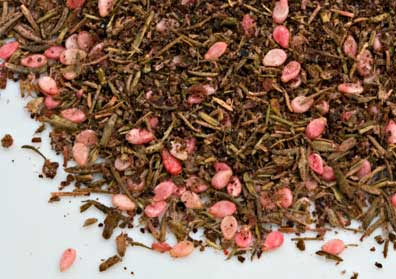
Za'atarZa’atar Herb Blend
Because za’atar has so many uses, I make a lot at one time: 1/2 cup oregano, thyme, and sumac, 1/4 cup sesame seeds, and 1 Tbsp. salt. The sumac, which has a sour taste akin to lemon, is what gives za'atar its red color.

1 part dried Greek oregano, preferably wild-harvested
1 part dried thyme
1 part ground sumac
1/2 part white sesame seeds
Salt to taste

Grind the oregano and thyme in a spice grinder or blender, making sure it’s free of sticks and stems. Put the herbs in a glass jar with a tight sealing lid. Add the sumac, sesame seeds, and salt and shake well to thoroughly combine. Put on the lid and close it tightly. Store away from heat and light.

Za'atar OlivesZa’atar Olives
Made entirely with pantry staples, Za’atar Olives are easy to prepare and make a great last-minute appetizer. Especially when warm, Za’atar Olives are an addictive treat.

2 cups Kalamata olives
1/2 cup olive oil
3 Tbsp. Za’atar Herb Blend (see recipe above)

Rinse the olives and dry them well. Put the olives and olive oil in a small saucepan, bring the olive oil to a simmer, and simmer the olives for 15 minutes. Stir in the Za’atar Herb Blend and simmer for 5 minutes. Serve warm or at room temperature.

Za'atar Bread - Mana'eeshZa’atar Flatbread (Mana’eesh bi Za’atar)
Makes 12 6” flatbreads
When I have breakfast with Marie, an Armenian friend who was born and raised in Beirut, she always serves Mana’eesh, olives, tomatoes, cucumbers, and cheese. Breakfast at Marie’s was my first introduction to za’atar; it's been a part of my repertoire. To make it from scratch, I use my Palestinian friend Salwa’s recipe for pita bread, and top it with Za’atar Herb Blend and olive oil. Although Marie serves this for breakfast, we eat it for a snack, for lunch, or as part of an appetizer spread. If you’re cooking for a small family, like I do, use half the dough for Mana’eesh and the second half for Za’atar pizza (see recipe below).

Dough:
2 1/2 cups lukewarm water
1 Tbsp. yeast (1 packet)
1 tsp. sugar
1 Tbsp. salt
6 – 7 cups all-purpose or bread flour

Topping:
1/2 cup olive oil
1/2 cup Za’atar Herb Blend (see recipe above)

Make the Dough: Place the water in a large bowl. Sprinkle the yeast over the water, sprinkle the sugar on top and let sit for 10 minutes, or until the yeast begins to foam. Mix in the salt and half the flour. Add the rest of the flour one cup at a time, just until the dough holds together. Knead the dough well (either by hand or in a standing mixer), adding flour as necessary until the dough is smooth and shiny. You may need more or less flour than called for in the recipe.

Put the kneaded dough in an oiled bowl to rise, cover the bowl with plastic wrap and a dish towel, and put it in a warm spot. Let the dough rise for 1 hour, or until it has doubled in size.


Preheat the oven to 500°F.

Divide the dough into 12 pieces and pat each piece into a 6” round flatbread. Place the flatbreads on baking sheets with rims; 6 dough rounds fit on a half-sheet pan. Use your fingers to dimple the tops of each flatbread. Let the flatbreads rest for 20 minutes.

Make the Topping: Mix together the olive oil and Za’atar Herb Blend.

Assemble and Bake the Flatbreads: Dimple the flatbreads one more time. Divide the topping between the flatbreads, about 1 Tbsp. each, and spread it evenly over the flatbreads’ tops. Bake the flatbreads, one baking sheet at a time, for 8-10 minutes, or until the flatbreads are golden. Serve immediately.

Note: Mana’eesh can be made ahead and rewarmed just before serving. To rewarm, stack the Mana’eesh, topping side to topping side, and wrap in aluminum foil. Put in a 300°F oven for 5-10 minutes, or until they are warmed through.

Za'atar with LabnehZa’atar with Labneh (Yogurt Cheese)
Makes 3/4 cup

Plain Labneh goes really well with Za’atar Flatbreads. For garlic fans, mix 1-2 cloves puréed garlic into the cheese (an easy way to purée the garlic is with a
standard Microplane rasp grater). Usually, I let the yogurt drain into the sink. If I’m feeling ambitious, I let it drain into a bowl and use the liquid to replace some of the water when I’m making bread dough.

2 cups plain yogurt, preferably whole milk
Pinch of salt
Za’atar Herb Blend (see recipe above)
Olive oil (optional)

Line a strainer with a paper towel. Mix a little salt into the yogurt and dump the salted yogurt into the paper-towel-lined strainer. Let the yogurt drain for 4 hours or overnight.

Spread the yogurt on a plate, sprinkle with Za’atar Herb Blend to taste, and drizzle with olive oil (if using). Serve with crackers, pita chips, or triangles of pita bread.

Za'atar PizzaZa’atar Pizza
Makes 12”-15” pizza
Extra Za’atar Tomato Sauce is a great way to dress up grilled chicken, lamb, or pork (see recipe below); it also may be frozen for future pizzas. The amount of Aleppo or red pepper depends on how spicy you like your food. Pick either Topping#1 or Topping #2 or, if you want to try them both, make the full amount of Za’atar Flatbread dough.

1/2 recipe Za’atar Flatbread dough (see recipe above)

Za’atar Onion Topping (Topping #1):
1/2 cup thinly sliced onions
1/4 cup chopped parsley
2 Tbsp. olive oil
2 Tbsp. Za’atar Herb Blend (see recipe above)
2 tsp. minced garlic
1/4 – 1/2 tsp. Aleppo pepper or 1/8 – 1/4 tsp. crushed red pepper (optional)
1/2 cup crumbled feta cheese

Za’atar Tomato Sauce (Topping #2) (makes enough sauce for 2 pizzas):
1 14.5 ounce can diced tomatoes, preferably fire-roasted
2 tsp. finely minced or puréed garlic
2 Tbsp. Za’atar Herb Blend (see recipe above)
1/2 – 1 tsp. Aleppo pepper or 1/4 – 1/2 crushed red pepper (optional)
1 Tbsp. olive oil
1/2 cup water or white wine
Salt
Freshly ground black pepper
1/2 cup thinly sliced onions
1/2 cup crumbled feta cheese

Shape the Pizzas: Shape the dough into a 12-15” round; the exact size depends on how thick you like your pizza crust. Place the dough on a pizza pan or baking sheet with rims. Use your fingers to dimple the top of the pizza, and let it rest for 20-30 minutes.

Preheat the oven to 500°F.

To Make Topping #1: Mix together all the topping ingredients except the crumbled feta.

To Assemble Pizza with Topping #1: Spread the topping mix over the pizza. Sprinkle the crumbled feta over the topping.

To Make Topping #2: In a saucepan, mix together the tomatoes, garlic, Za’atar Herb Blend, Aleppo pepper, olive oil, and water or wine. Bring to a boil, turn down the heat, and simmer for 15 – 20 minutes, or until the sauce is very thick. Taste and add salt or freshly ground black pepper, as needed.

To Assemble Pizza with Topping #2: Spread half the tomato sauce over the pizza to cover it (use more if you like saucy pizzas). Save any extra tomato sauce for another purpose. Evenly distribute the onions over the tomato sauce and sprinkle with crumbled feta.

Bake the Pizza: Turn the oven down to 450°F. Bake the pizza for 25-30 minutes or until the crust is nicely golden. Serve immediately.
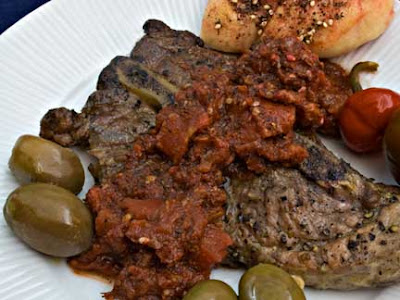
Za'atar Tomato Sauce and Grilled PorkGrilled Pork Steak with Za’atar Tomato Sauce
Serves 4

Za’atar Tomato Sauce goes equally well with grilled lamb or chicken. The sauce is identical to the one used for Za’atar Pizza (see recipe above). For the same reason that brining improves the flavor of pork chops, salting meats well in advance of grilling makes them taste much better. If you can only find large pork steaks, buy 2 and cut them in half.

Meat:
4 pork steaks
Salt
Freshly ground black pepper

Za’atar Tomato Sauce:
1 14.5 ounce can diced tomatoes, preferably fire-roasted
2 tsp. finely minced or puréed garlic
2 Tbsp. Za’atar Herb Blend (see recipe above)
1/2 – 1 tsp. Aleppo pepper or 1/4 – 1/2 crushed red pepper (optional)
1 Tbsp. olive oil
1/2 cup water or white wine
Salt
Freshly ground black pepper

Prepare the Meat: Rinse the steaks and dry well. Season both sides with salt and plenty of freshly ground black pepper. Let sit at room temperature while you make the sauce.

Make the Tomato Sauce: In a saucepan, mix together the tomatoes, garlic, Za’atar Herb Blend, Aleppo pepper, olive oil, and water or wine. Bring to a boil, turn down the heat, and simmer for 15 – 20 minutes or until the sauce is the thickness you prefer. Taste and add salt or freshly ground black pepper, as needed.

Cook the Meat: Grill the pork steak over a medium hot fire or in a grill pan on top of the stove. Turn the meat regularly until it is just done; be careful not to overcook it. Serve immediately with Za’atar Tomato Sauce spooned over.
~~~~~~~~~~~~~~~~~~~~~
This is my entry for
Weekend Herb Blogging, which I am hosting this week at Mediterranean Cooking in Alaska.

Tuesday, February 17, 2009

Recipe for Edamame Pesto Spread (Ενταμάμε Πέστο Σαλάτα)

I always keep a bag of shelled edamame beans in the freezer. They’re colorful, taste great, and very versatile.

Edamames are green soybeans, harvested while the pod is still soft and bright green. In Japanese, “eda” means branches and “mame” means beans; thus, edamames grow in clusters on the soybean plant’s many branches. Edamames are rich in fiber and protein and, like all soybeans, may have significant health benefits.

Last weekend I used them to make Edamame Pesto Spread, a garlicky bean spread loaded with fresh basil, fresh mint, and parmesan cheese. The recipe was inspired by, but quite different from, Marcella Hazan’s Ligurian Raw Fava Bean Spread in
Marcella Cucina.

I often use edamames as a substitute for fresh fava beans in Greek recipes, such as braised favas with dill and onions or favas and potatoes baked in grape leaves (recipes for both are in
Tastes Like Home: Mediterranean Cooking in Alaska). Recently, I used edamames in Seafood and Vegetable Stew with Rouille.

Except for the fresh herbs, which are readily available at most grocery stores, Edamame Pesto Spread is made with pantry staples. It goes together in minutes and can be served right away. As a result it’s a handy recipe to keep in mind for last minute entertaining, especially in summer when herb gardens flourish.

Edamame Pesto SpreadEdamame Pesto Spread (Ενταμάμε Πέστο Σαλάτα)
Makes about 2 cups

Serve as an appetizer with pita chips or thin slices of bread. Edamame Pesto Spread is also good in sandwiches or on pasta.

1/2 cup freshly grated (or finely ground in a food processor) parmesan cheese
2 cups shelled edamame beans (frozen), thawed
2-3 garlic cloves
1/4 cup whole mint leaves
1/4 cup whole basil leaves
1/4 cup fresh lemon juice
1/2 cup olive oil
Salt
Freshly ground black pepper

Put all the ingredients in a food processor and process until smooth, being sure to scrape down the sides of the processor bowl. Taste and add salt, freshly ground black pepper, or lemon juice, as needed.
~~~~~~~~~~~~~~~~~~~~~~~~
This is my entry for
My Legume Love Affair, created and hosted by Susan from The Well-Seasoned Cook.

Grilled Cheese and Edamame Pesto SandwichesGrilled Cheese and Edamame Pesto Spread Sandwich

Saturday, February 7, 2009

Recipe for Seafood and Vegetable Stew with Rouille (Red Pepper Sauce)

Fish Stew with Vegetables and RouilleFish and Vegetable Stew with Rouille

The discovery of a new dish does more for human happiness than the discovery of a new star.
John Anthelme Brillat-Savarin, Physiologie du Gout (Physiology of Taste) (1825)

Where do recipes come from? Family, community, tradition, and serendipitous accident are easy but incomplete answers.

The primary source of recipes has always been an individual cook’s imagination and palate. Over time, original recipes are modified by other cooks’ imaginations and adjusted by yet more cooks’ palates, to infinity and without limitation.

The food articles I enjoy most are ones that explain how a dish was developed or why a cook chose to combine certain flavors. Although its authors’ cooking styles and skills are quite different from my own, Ideas in Food is one of my favorite blogs. It focuses on the techniques and thought processes that go into creating unique flavor combinations.

I recently made Seafood and Vegetable Stew with Rouille. Here's how it came into being:

My kitchen counter was overflowing with
garnet yams, bounty from more than one Full Circle Farms CSA box. I wanted to do something other than oven-roasting the yams or making oven fries. Looking for inspiration, I randomly pulled cookbooks off the shelves.

Barbara Kafka’s book
Soup: A Way of Life had an interesting recipe for Fall Fish Stew that included sweet potatoes. I decided to try it.

My first version of the stew was similar to Kafka’s, though I substituted sautéed sweet potatoes for boiled and edamame beans for limas. After tasting the broth, I wanted more flavor.

In my next version, I added sautéed onions and red bell peppers, and used a different Rouille recipe than Kafka’s. I seasoned the Rouille with dried, ground red Moroccan pepper (poivron rouge). This version was tasty, but I thought it could be better.

In my final version, I added crushed fennel seeds and shelled shrimp. This combination was exactly what I wanted. Although inspired by Kafka, the final stew is uniquely my own.

Map of High Atlas MountainsI internet-ordered poivron rouge from World Spice Merchants in Seattle, one of my favorite herb and spice purveyors. World Spice describes poivron rouge as “sweet red pepper … produced from sweet round red niora peppers grown in the lush valleys at the foot of the High Atlas Mountains to the northeast of Marrakech.“

Poivron Rouge and PaprikaPoivron Rouge and Sweet Hungarian Paprika

Although Moroccan recipes often call for paprika, niora peppers are what Moroccans use for “paprika.” The flavor of ground niora differs significantly from sweet Hungarian paprika. Niora is spicier and has a fruitier flavor than its Hungarian counterpart, which has a slightly bitter aftertaste.

Moroccan niora peppers are likely the same as the ñora peppers used in
Romesco sauce and other Spanish and Catalonian dishes. In addition to having similar names, nioras and ñoras look the same. Most texts refer to nioras and ñoras only as members of the Capsicum annuum family; in other words, as domesticated peppers. However, in Catalan Cuisine, Colman Andrews says pepper scholar Charles Perry “thinks the nyora [ñora] pepper is the variety scientifically called Capsicum annuum grossum/provar. Pomiforme/sub-var. Conc. Humilirotundum Haz."

No matter what its scientific designation might be, poivron rouge has wonderful flavor and a permanent place in my spice cupboard. Its mildly spicy and fruity tastes make distinctively delicious Rouille and a mouth-wateringly good Seafood and Vegetable Stew.

Seafood Stew with Vegetables and RouilleSeafood and Vegetable Stew with Rouille (Red Pepper Sauce)
Serves 4
The stew may also be made with just fish or just shrimp; if so, use 1 pound of either ingredient. Although not necessary, steamed rice is a nice complement to the spicy, aromatic broth. Serve the rice on the side so eaters can stir the amount they desire into the stew.

1 cup peeled, diced garnet yams or sweet potatoes, 1/2” dice (1 garnet yam)
2 Tbsp. olive oil
Salt
Freshly ground black pepper
1 cup diced red bell pepper, 1/2” dice (1-2 peppers)
1 cup diced yellow onion, 1/2” dice
1 tsp. freshly crushed fennel seed
4 cups fish stock or clam broth (nectar)
1 recipe Rouille (see below)
1 cup shelled edamame beans (thawed) or fresh fava beans
1/2 pound skinless fillets of halibut, rockfish, cod, or other white-fleshed fish, cut in 3/4” pieces
1/2 pound shelled and cleaned shrimp,
16-20 count, halved crosswise
1/4 cup fresh lemon juice (1 lemon)

Minced parsley for garnish

Sauté the garnet yams in olive oil, lightly seasoned with salt and freshly ground black pepper, until they start to brown around the edges. Stir in the red bell peppers and onions, and continue to sauté until the onions soften. Add the crushed fennel seed and sauté for 1 minute. Stir in the fish stock, bring to a boil, turn down the heat and simmer for 15 minutes. (The recipe may be made ahead to this point.)

In a small bowl, whisk one cup of the hot broth into the Rouille. Stir this mixture into the simmering stew pot, along with the edamame beans, fish, and shrimp. Do not let boil or the Rouille may curdle. Simmer for 3-4 minutes, or until the seafood is cooked through. Stir in the lemon juice. Taste and add salt or lemon juice, as needed.

Sprinkle with minced parsley and serve immediately with steamed rice and wedges of lemon.

Rouille
Recipe adapted from
In the Hands of a Chef by Jody Adams
Rouille goes well with all fish, and is a tasty addition to fish salads. The recipe may be doubled or tripled and keeps for a week in the refrigerator.

1 egg yolk
1/2 tsp. Dijon mustard
1 Tbsp. fresh lemon juice
1/4 cup vegetable oil
1/4 cup best quality extra virgin olive oil
2 tsp. chopped garlic
1/2 tsp. salt
4 tsp.
poivron rouge or sweet Hungarian paprika
1/4 tsp. cayenne pepper

Put the egg yolk, mustard, and lemon juice in a blender and mix well. While the blender is running, add the vegetable oil drop by drop so that it emulsifies with the other ingredients. While the blender is running, pour in the olive oil in a steady stream. Add the remaining ingredients and blend until the Rouille is very smooth, scraping down the sides of the blender to ensure all ingredients are thoroughly incorporated.
~~~~~~~~~~~~~~~~~~~~~~
This is my recipe for
Weekend Herb Blogging, hosted this week by Dee from The Daily Tiffin.