Showing posts with label thyme. Show all posts

Sunday, October 11, 2009

Recipe: Clams and Giant White Beans with Buttery Wine Broth (Κυδώνια με Γίγαντες)

Last fall we took a quick trip to San Francisco where, unsurprisingly, the weather was cloudy and the food delicious. One Saturday we went to the Ferry Plaza Farmers Market, ogled vegetables and local cheeses, and ate at Hog Island Oyster Company. Though our table was outside on the chilly plaza, we warmed ourselves with champagne and garlicky Clams with Gigantes and Buttery Wine Broth. We walked away happy.

Gigantes, also known as
giant Greek beans or Phaseolus coccineus (multiflorus), have a starchy texture that is a perfect foil for sauces of all kinds. They're a PGI product of Greece, and always a treat to eat. (In the European Union, a PGI designation identifies foods grown in unique regions that have special qualities and characteristics.)
....

When I was working, I made steamed clams because they were quick. Now I just make them because they taste good. 


Clams with Giant White Beans and Buttery Wine Broth (Κυδώνια με Γίγαντες)
Serves 4
Inspired by Hog Island Oyster Company, San Francisco, California
If you prefer not to eat butter, this dish is delicious when made with extra-virgin olive oil. Gigantes may be cooked several days ahead (or canned beans may be used), in which case this makes a deliciously quick mid-week meal. 


Mediterranean Cooking in Alaska has moved as of March 2011. To read this post please go to


http://www.laurieconstantino.com/clams-with-gigantes/


Please click on over and visit my new site. Thank you!


Sunday, April 19, 2009

Ingredient: Tepary Beans with Recipe for Tepary Bean and Vegetable Stew

The snow in our front yard is nearly gone, the ice in the pond has melted, and spring is quickening. After our difficult winter, I’m looking forward to seasonal change even more eagerly than usual.

Speaking of winter, the overwhelming support from the blogging community during my father’s long illness and ultimate death was much appreciated. It’s not easy to lose a parent, but the kindness and concern shown by so many helped. Thank you all so much.

Because I spent so much of the winter in Washington near my parents, I was able to see my sister regularly, to my great joy. Though we’re two years apart and have the closeness that comes from childhood bedroom-sharing, as adults we’ve always lived far away from each other. It was indescribably soul-satisfying to have her (and her husband and dogs) be part of daily life the last few months.

Shopping for food and cooking dinner with my sister brought new life to what too often are routine activities. Despite our years apart, we’ve developed similar cooking styles and work together smoothly and easily in the kitchen.

One of the projects we undertook was finding and cooking tepary beans for My Legume Love Affair Ninth Helping. Despite searching in numerous Seattle area stores, we were unable to find tepary beans and resorted to ordering them
online. When they arrived, we made Tepary Bean and Vegetable Stew and loved it. I’ll definitely be cooking with tepary beans again.

Tepary Beans

Tepary beans (Phaseolus acutifolius) are a bush bean originating in the desert areas of Mexico and the American Southwest. They grow best in extreme heat and under very dry conditions. Tepary beans’ taproot is twice as long as common beans’ (Phaseolus vulgaris), which allows teparies to efficiently take advantage of even small amounts of soil moisture.

Nutritionally, tiny tepary beans (1/4” long, the size of large lentils) are higher in protein, iron, calcium, and fiber than most beans. Their nutritional benefits, sweet, nutty flavor, and relatively quick cooking time make teparies well worth searching out.

Jay Bost, in the
June 2006 Seeds of Change newsletter, wrote a fascinating article about tepary beans. His discussion of the growing conditions under which teparies thrive makes me interested in trying them in Greece, which has the necessary hot dry summers:

“Due to its native habitat in the Sonoran Desert, domesticated tepary beans … are considered by many to be the most drought-tolerant annual legume in the world. They are capable of producing a harvest of beans with a single rain in the harshest conditions; when irrigated, they produce higher yields only up to a certain point, after which excess moisture becomes a detriment and leads to overproduction of foliage and low bean production. In fact, it appears that moisture stress is necessary to trigger fruiting. Part of the tepary bean's secret to success in dry areas is to grow quickly when water is available. While pinto beans take 90 to 120 days to maturity, teparies take only 75 to 85. As water shortages become a reality in many parts of the U.S. and around the world, teparies will undoubtedly play an important role in dryland agriculture. In fact, tepary cultivation is now taking place in dry areas of Africa and is being revived in southern Arizona.”


Bost details teparies’ nutritional benefits:

“Part of the tepary bean's appeal, in addition to its drought tolerance, is its superior nutritional content. It has a higher protein content (23–30%) than common beans such as pinto, kidney, and navy, as well as higher levels of oil, calcium, iron, magnesium, zinc, phosphorus, and potassium. While higher in all of these desired nutrients, tepary beans are lower in polyunsaturated fat and in the anti-enzymatic compounds which make common beans hard to digest (Hamama and Bhardwaj 2002). … Tepary beans are proving to be an ideal food for people prone to diabetes or suffering from diabetes owing to the beans' high fiber level, which make them a "slow-release food"; that is, tepary beans' sugars are released slowly and steadily, rather than in a spike as in many high carbohydrate, low fiber foods common in our diets.”


The
Ark of Taste is a list of endangered food plants and animals that the Slow Food Foundation for Biodiversity seeks to protect and defend. Tepary Beans are now on the Ark of Taste list for the United States.

I can’t wait to start playing around in the kitchen with tepary beans, and hope to soon convince a local store to carry them!


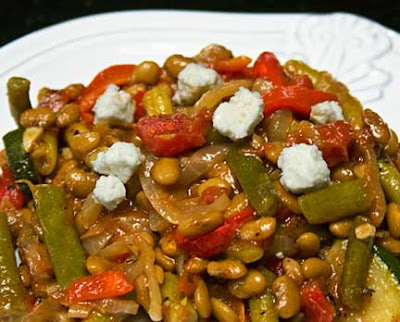
Tepary Bean and Vegetable StewTepary Bean and Vegetable Stew
Serves 4
Adapted from Heirloom Beans by Steve Sando and Vanessa Barrington (Chronicle Books 2008)
Tepary beans’ firm texture and sweet flavor pair well with most vegetables. This stew includes peppers, green beans, zucchini, and tomatoes, all of which, like tepary beans, originate in the Americas. I roast red peppers directly over a gas burner while the beans are cooking, put them in a closed paper bag until cool (which makes them easier to peel), remove the charred skin with my fingers (don’t use water; it’ll take away too much flavor), and cut them into thin strips. The sweet bean and vegetable stew is perfectly set off by best-quality, sharp, salty feta cheese from Greece.

1/2 pound dried tepary beans
Water
3 cups diced onions, 1/2” dice (1 large onion)
1/4 cup olive oil, divided
Salt
Freshly ground black pepper
2 Tbsp. minced garlic
1 14.5-ounce can diced tomatoes, preferably fire-roasted
1/2 pound green beans, trimmed and cut into 1” lengths (4-5 cups)
1 large zucchini, cut in half lengthwise and then diagonally into 1/4” slices (4 cups)
2 tsp. minced fresh thyme
2 red bell peppers, roasted, cut into strips and then in half
4-6 ounces best quality feta cheese, crumbled, for garnish

Spread out the tepary beans in a flat pan and inspect carefully, removing any pebbles or debris. Rinse well with cold water. Put the beans in a large pot with enough water to cover them by 3 inches. Bring to a boil, and cook for 5 minutes. Cover and turn off the heat. Let sit for at least one hour. (NOTE: Next time I cook tepary beans, I’ll try eliminating this step; I suspect tiny teparies don’t need pre-soaking or pre-cooking.)

Bring the tepary beans and their liquid back to the boil (do not discard the original water). Turn down the heat, and simmer for 1 – 2 hours, or until the beans are just tender and not at all mushy.

In a separate pan, sauté the onions, lightly seasoned with salt and freshly ground black pepper, in 2 Tbsp. olive oil until the onions soften and start to turn golden. Stir in the garlic and cook for 1 minute. When the tepary beans are done simmering, scrape the onions, garlic, and oil into the bean pot. Stir in the tomatoes and green beans. Bring to a boil, cover, turn down the heat, and simmer for 15-20 minutes or until the green beans are tender.

While the green beans are cooking, using the same pan in which the onions were cooked, sauté the zucchini, lightly seasoned with salt and freshly ground black pepper, in olive oil. Cook until the zucchini browns lightly and begins to soften. Turn off the heat and stir in the thyme.

When the green beans are tender, scrape the zucchini, thyme, and their oil into the bean pot. Stir in the roasted red pepper pieces. Simmer for 5 minutes.

Serve hot, garnished with crumbled feta.
~~~~~~~~~~~~~~~~~~~~~~~~~~~~~
This is an entry for
My Legume Love Affair – 9th Helping (MLLA9), created by Susan of The Well-Seasoned Cook, which I hosted in March 2009. My Legume Love Affair - 10th Helping for April 2009 is being hosted by Courtney of Coco Cooks.

Friday, February 27, 2009

All About Za'atar with Recipe for Za'atar Herb Blend and 5 Recipes for Using Za'atar

Za'atar Bread and LabnehIf za’atar is within reach, anyone can make delicious food at the drop of a hat. The possibilities are endless: Za’atar Olives, Za’atar and Labneh, Za’atar Tomato Sauce with Grilled Meat, Za’atar Bread, and Za’atar Pizza are only a few ways to use this versatile ingredient. I almost have my Za'atar Chicken recipe ready to post.

Za’atar is
valued for more than great taste. “Who for forty days eats powdered dried leaves of za'tar fasting can be harmed by no serpent.” If the worst happens and you’re bitten by an asp or stung by a scorpion, za’atar cures “the bitings and the stings of venomous beasts." A Bethlehem proverb teaches, “Thyme and oil lead to the prosperity of the home.” Even more importantly, “eating za'atar improves your memory and makes you more intelligent.”

So what is za’atar?
A. An herb blend
B. Savory
C. Thyme
D. Oregano
E. Biblical hyssop
F. All of the above

The answer is “(F) All of the above.”

Za’atar (ZAHT-ar) is a class of herbs, and includes members of the thyme, oregano, and savory families. Za’atar is also a Middle Eastern herb blend, containing one or more of the za’atar herbs. As with many centuries-old dishes, za’atar blend has many regional and familial variations.

Disparity in za’atar’s spelling is pervasive; za’atar, za’tar, zatar, zahtar, satar, zahatar, and za’ater are all used. The spelling confusion is easy to explain. Za’atar is an Arabic word (الزعتر). Like Greek and other languages that don’t use the Roman alphabet, Arabic is inconsistently transliterated into English.

Some experts claim the herb za’atar is only one specific type of savory; others claim with equal vehemence it’s one specific type of oregano. Both may be right, but only for the region or family they’re writing about.

No matter its local or historical usage, “za’atar” has come to be a generic term used in the Middle East for a group of similarly-flavored members of the herb genus
Lamiaceae. Za’atar herbs grow in the same habitat and have similar appearances. These practical factors may have led Middle Easterners to use one word for all the plants.

Linguistic confusion over “za’atar” is not unique to Arabic.
In Turkish, the plant groups Origanum, Thymbra, Coridothymus, Satureja, and Thymus, generically called za’atar in Arabic, are all referred to as “kekik.”

Scientific analysis supports the pragmatic use of one word to refer to a plant group rather than a single plant. Gas chromatography and mass spectrometry show “the chemical profiles of the specific chemotypes of Satureja thymbra L. and Thymbra spicata L [a]re very similar. They are also very similar to those of the chemotypes of Coridothymus capitatus and Origanum syriacum.” [These four herb species are all called za’atar.]

Adding to the confusion, each za’atar herb is known by more than one name:

· Coridothymus capitatus aka Thymus capitatus aka Satureia/Satureja capitata (conehead thyme, headed savory, Persian hyssop, za’atar parsi, Spanish oregano)
· Origanum maru aka Origanum syriacum/cyriacum aka Marjorana syriaca (Biblical hyssop, Lebanese oregano, Syrian oregano, Egyptian marjoram)
· Satureja/Satureia thymbra (Roman za’atar, za’atar rumi, pink savory, barrel sweetener; in Greek, Θρούμπι, Τραγορίγανη)
· Thymbra spicata (spiked thyme, donkey hyssop, desert hyssop)

There are also several varieties of commercially available za’atar blends. For example,
according to Paula Wolfert, “The taste of a za’atar mixture can be herbal, nutty, or toasty. …’Israeli’ is a pale green blend of pungent herbs that includes the biblical hyssop, along with toasted sesame seeds and sumac. The ‘Syrian’ blend, the color of sand, has a decidedly toasty flavor. The ‘Jordanian’ blend is dark green and very herbal, with some turmeric.” These aren’t the only za’atar blends; each spice merchant and family has a unique formula.

Before creating my own za’atar blend, I bought and tasted several commercially available varieties. I experimented with diverse combinations of herbs trying to best approximate the flavor of my favorite commercial brand. I also read as many English-language za’atar recipes as I could find.

For the herbal flavor in za'atar blend, many North American recipes use only dried domestic thyme, or a mixture of domestic thyme and domestic marjoram. These recipes, when tasted side by side with imported za’atar blends, tasted bland to me. I discovered that Greek oregano (preferably, but not necessarily, wild-harvested and sold on the stem) is key to creating flavorful za’atar in Alaska. Greek oregano’s spicy flavor, when tempered by combining it with dried wild or domestic thyme, approximates the flavor of authentic za’atar blend.

For anyone interested in growing their own, the various plants referred to as za’atar can be purchased from
Well Sweep Herb Farm or Mountain Valley Growers. Although they’re tasty, keep in mind that most domestically grown herbs don’t have the flavor of their wild progenitors. There’s nothing like scarce water, poor soil, and hot sun for developing flavor.

For those who live where there are Middle Eastern markets or specialty stores, by all means buy ready-made, preferably imported, za’atar. You can also
order za’atar blends online.

In Anchorage, you can buy sumac, a key ingredient in my za’atar blend, at
Sagaya, City Market, and Summit Spice. Summit Spice sells its own Anchorage-made za’atar blend in tiny packets using marjoram, thyme, sumac, and sesame seeds. Summit also has a product labeled “Greek oregano,” which they tell me may be grown on farms in Greece or Turkey, depending on the shipment.
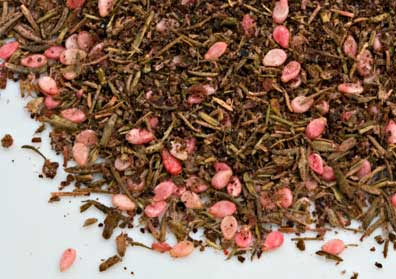
Za'atarZa’atar Herb Blend
Because za’atar has so many uses, I make a lot at one time: 1/2 cup oregano, thyme, and sumac, 1/4 cup sesame seeds, and 1 Tbsp. salt. The sumac, which has a sour taste akin to lemon, is what gives za'atar its red color.

1 part dried Greek oregano, preferably wild-harvested
1 part dried thyme
1 part ground sumac
1/2 part white sesame seeds
Salt to taste

Grind the oregano and thyme in a spice grinder or blender, making sure it’s free of sticks and stems. Put the herbs in a glass jar with a tight sealing lid. Add the sumac, sesame seeds, and salt and shake well to thoroughly combine. Put on the lid and close it tightly. Store away from heat and light.

Za'atar OlivesZa’atar Olives
Made entirely with pantry staples, Za’atar Olives are easy to prepare and make a great last-minute appetizer. Especially when warm, Za’atar Olives are an addictive treat.

2 cups Kalamata olives
1/2 cup olive oil
3 Tbsp. Za’atar Herb Blend (see recipe above)

Rinse the olives and dry them well. Put the olives and olive oil in a small saucepan, bring the olive oil to a simmer, and simmer the olives for 15 minutes. Stir in the Za’atar Herb Blend and simmer for 5 minutes. Serve warm or at room temperature.

Za'atar Bread - Mana'eeshZa’atar Flatbread (Mana’eesh bi Za’atar)
Makes 12 6” flatbreads
When I have breakfast with Marie, an Armenian friend who was born and raised in Beirut, she always serves Mana’eesh, olives, tomatoes, cucumbers, and cheese. Breakfast at Marie’s was my first introduction to za’atar; it's been a part of my repertoire. To make it from scratch, I use my Palestinian friend Salwa’s recipe for pita bread, and top it with Za’atar Herb Blend and olive oil. Although Marie serves this for breakfast, we eat it for a snack, for lunch, or as part of an appetizer spread. If you’re cooking for a small family, like I do, use half the dough for Mana’eesh and the second half for Za’atar pizza (see recipe below).

Dough:
2 1/2 cups lukewarm water
1 Tbsp. yeast (1 packet)
1 tsp. sugar
1 Tbsp. salt
6 – 7 cups all-purpose or bread flour

Topping:
1/2 cup olive oil
1/2 cup Za’atar Herb Blend (see recipe above)

Make the Dough: Place the water in a large bowl. Sprinkle the yeast over the water, sprinkle the sugar on top and let sit for 10 minutes, or until the yeast begins to foam. Mix in the salt and half the flour. Add the rest of the flour one cup at a time, just until the dough holds together. Knead the dough well (either by hand or in a standing mixer), adding flour as necessary until the dough is smooth and shiny. You may need more or less flour than called for in the recipe.

Put the kneaded dough in an oiled bowl to rise, cover the bowl with plastic wrap and a dish towel, and put it in a warm spot. Let the dough rise for 1 hour, or until it has doubled in size.


Preheat the oven to 500°F.

Divide the dough into 12 pieces and pat each piece into a 6” round flatbread. Place the flatbreads on baking sheets with rims; 6 dough rounds fit on a half-sheet pan. Use your fingers to dimple the tops of each flatbread. Let the flatbreads rest for 20 minutes.

Make the Topping: Mix together the olive oil and Za’atar Herb Blend.

Assemble and Bake the Flatbreads: Dimple the flatbreads one more time. Divide the topping between the flatbreads, about 1 Tbsp. each, and spread it evenly over the flatbreads’ tops. Bake the flatbreads, one baking sheet at a time, for 8-10 minutes, or until the flatbreads are golden. Serve immediately.

Note: Mana’eesh can be made ahead and rewarmed just before serving. To rewarm, stack the Mana’eesh, topping side to topping side, and wrap in aluminum foil. Put in a 300°F oven for 5-10 minutes, or until they are warmed through.

Za'atar with LabnehZa’atar with Labneh (Yogurt Cheese)
Makes 3/4 cup

Plain Labneh goes really well with Za’atar Flatbreads. For garlic fans, mix 1-2 cloves puréed garlic into the cheese (an easy way to purée the garlic is with a
standard Microplane rasp grater). Usually, I let the yogurt drain into the sink. If I’m feeling ambitious, I let it drain into a bowl and use the liquid to replace some of the water when I’m making bread dough.

2 cups plain yogurt, preferably whole milk
Pinch of salt
Za’atar Herb Blend (see recipe above)
Olive oil (optional)

Line a strainer with a paper towel. Mix a little salt into the yogurt and dump the salted yogurt into the paper-towel-lined strainer. Let the yogurt drain for 4 hours or overnight.

Spread the yogurt on a plate, sprinkle with Za’atar Herb Blend to taste, and drizzle with olive oil (if using). Serve with crackers, pita chips, or triangles of pita bread.

Za'atar PizzaZa’atar Pizza
Makes 12”-15” pizza
Extra Za’atar Tomato Sauce is a great way to dress up grilled chicken, lamb, or pork (see recipe below); it also may be frozen for future pizzas. The amount of Aleppo or red pepper depends on how spicy you like your food. Pick either Topping#1 or Topping #2 or, if you want to try them both, make the full amount of Za’atar Flatbread dough.

1/2 recipe Za’atar Flatbread dough (see recipe above)

Za’atar Onion Topping (Topping #1):
1/2 cup thinly sliced onions
1/4 cup chopped parsley
2 Tbsp. olive oil
2 Tbsp. Za’atar Herb Blend (see recipe above)
2 tsp. minced garlic
1/4 – 1/2 tsp. Aleppo pepper or 1/8 – 1/4 tsp. crushed red pepper (optional)
1/2 cup crumbled feta cheese

Za’atar Tomato Sauce (Topping #2) (makes enough sauce for 2 pizzas):
1 14.5 ounce can diced tomatoes, preferably fire-roasted
2 tsp. finely minced or puréed garlic
2 Tbsp. Za’atar Herb Blend (see recipe above)
1/2 – 1 tsp. Aleppo pepper or 1/4 – 1/2 crushed red pepper (optional)
1 Tbsp. olive oil
1/2 cup water or white wine
Salt
Freshly ground black pepper
1/2 cup thinly sliced onions
1/2 cup crumbled feta cheese

Shape the Pizzas: Shape the dough into a 12-15” round; the exact size depends on how thick you like your pizza crust. Place the dough on a pizza pan or baking sheet with rims. Use your fingers to dimple the top of the pizza, and let it rest for 20-30 minutes.

Preheat the oven to 500°F.

To Make Topping #1: Mix together all the topping ingredients except the crumbled feta.

To Assemble Pizza with Topping #1: Spread the topping mix over the pizza. Sprinkle the crumbled feta over the topping.

To Make Topping #2: In a saucepan, mix together the tomatoes, garlic, Za’atar Herb Blend, Aleppo pepper, olive oil, and water or wine. Bring to a boil, turn down the heat, and simmer for 15 – 20 minutes, or until the sauce is very thick. Taste and add salt or freshly ground black pepper, as needed.

To Assemble Pizza with Topping #2: Spread half the tomato sauce over the pizza to cover it (use more if you like saucy pizzas). Save any extra tomato sauce for another purpose. Evenly distribute the onions over the tomato sauce and sprinkle with crumbled feta.

Bake the Pizza: Turn the oven down to 450°F. Bake the pizza for 25-30 minutes or until the crust is nicely golden. Serve immediately.
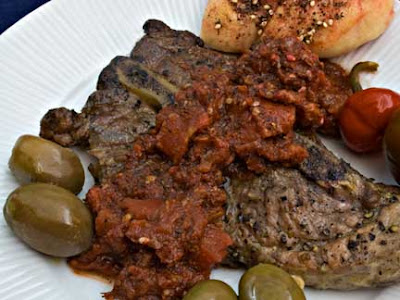
Za'atar Tomato Sauce and Grilled PorkGrilled Pork Steak with Za’atar Tomato Sauce
Serves 4

Za’atar Tomato Sauce goes equally well with grilled lamb or chicken. The sauce is identical to the one used for Za’atar Pizza (see recipe above). For the same reason that brining improves the flavor of pork chops, salting meats well in advance of grilling makes them taste much better. If you can only find large pork steaks, buy 2 and cut them in half.

Meat:
4 pork steaks
Salt
Freshly ground black pepper

Za’atar Tomato Sauce:
1 14.5 ounce can diced tomatoes, preferably fire-roasted
2 tsp. finely minced or puréed garlic
2 Tbsp. Za’atar Herb Blend (see recipe above)
1/2 – 1 tsp. Aleppo pepper or 1/4 – 1/2 crushed red pepper (optional)
1 Tbsp. olive oil
1/2 cup water or white wine
Salt
Freshly ground black pepper

Prepare the Meat: Rinse the steaks and dry well. Season both sides with salt and plenty of freshly ground black pepper. Let sit at room temperature while you make the sauce.

Make the Tomato Sauce: In a saucepan, mix together the tomatoes, garlic, Za’atar Herb Blend, Aleppo pepper, olive oil, and water or wine. Bring to a boil, turn down the heat, and simmer for 15 – 20 minutes or until the sauce is the thickness you prefer. Taste and add salt or freshly ground black pepper, as needed.

Cook the Meat: Grill the pork steak over a medium hot fire or in a grill pan on top of the stove. Turn the meat regularly until it is just done; be careful not to overcook it. Serve immediately with Za’atar Tomato Sauce spooned over.
~~~~~~~~~~~~~~~~~~~~~
This is my entry for
Weekend Herb Blogging, which I am hosting this week at Mediterranean Cooking in Alaska.

Monday, August 18, 2008

Greek Wild Thyme Honey with Recipe for Cinnamon-Honey Tart (Melopita – Μελόπιτα)

Thyme Covered Hillsides at Tigani BaySandy beaches and rocky promontories alternate along the island’s irregular coastline. Mounds of wild thyme cover the hills sloping down to the sea, and scent the sea air with their heady aroma.

Harvesting Wild Thyme

Harvesting Wild Thyme

By the start of summer, the wild thyme is in bloom. Yiannis, our beekeeper friend, has already moved his hives to fields near the shore and the abundantly blooming thyme. The bees spend their summer making thyme-flavored honey that Yiannis harvests and sells to locals and tourists alike.

I fell in love with thyme honey years ago at a galakatopoleio, a type of Greek store that sells milk, yogurt, and desserts like rice pudding (rizogalo) and custard pies (galaktoboureko). We’d stopped for a late breakfast and I ordered yogurt.

Used to American yogurt, which has a much thinner consistency than its Greek counterpart, I was surprised to see the galaktopoleio’s proprietor slice off a thick slab from a long yogurt loaf. He served the yogurt slice with liberal drizzlings of thyme honey. Despite its simplicity, the combination was utter perfection. Thyme honey, unlike the bland clover honey I grew up with, has a robust flavor.

When we return from Greece each year, we always have a supply of wild thyme honey in our baggage. However, in Alaska, Greek yogurt is difficult, and usually impossible, to find. When available, it’s too expensive for my budget.

Greek Yogurt and Honey
If I crave Greek yogurt and honey in Alaska, I buy plain, whole-milk yogurt (Pavel’s Original Russian Yogurt, available at Natural Pantry in Anchorage, is my favorite brand), and strain it for at least an hour through a paper towel set in a colander. Strained American yogurt mimics the texture of the yogurt we buy in Greece. I like straining yogurt right when I bring it home from the market; that way, it’s ready to eat at my convenience. All I need do is drizzle a scoop of strained yogurt with Yiannis’ honey, and my favorite breakfast is ready to serve.

Honey isn’t a newcomer to the Greek table. It’s been an important ingredient in Greek cooking throughout recorded history and continuing to the present day. In
The Deipnosophistae of Athenaeus, which includes excerpts from the earliest Greek writings about food and cooking, honey appears regularly. Among other uses, the ancient Greeks combined honey with wine, added it to savory sauces, and drizzled it over all kinds of sweets.

Athenaeus (circa 200 AD) catalogs “cheesecakes of every sort and every name,” including many that contain honey. In a recent post, Mariana of History of Greek Food wrote about her version of one cheesecake described by Athenaeus.

Cinnamon-Honey Tart (Melopita), a dessert using many of the same ingredients as the cheesecakes documented by Athenaeus, is still popular in Greece today. There’s also a Greek honey cake called Melopita; for clarity, I’ve translated the cheesecake-style Melopita as Cinnamon-Honey Tart.

On some Greek islands, and notably on
Sifnos, Cinnamon-Honey Tart is traditionally made for Easter feasts. It’s worthy of a place at any special occasion table.

Cinnamon Honey Tart(Melopita)Cinnamon-Honey Tart (Melopita – Μελόπιτα)
Serves 10 - 12
The texture of Cinnamon-Honey Tart filling is similar to pumpkin pie filling, and is better when made with whole-milk ricotta. In Greece, fresh, unsalted myzithra is used instead of ricotta, but this product isn’t available in Alaska. The myzithra sold in most US supermarkets is dried, salted, and not suitable for a sweet tart filling.

I like making Cinnamon-Honey Tart in an 11” tart pan with a removable bottom to increase the crust to filling ratio. Use a 9” springform cake pan if you prefer cheesecake to tarts (more filling, less crust), a 9”x13” pan if you want to serve the dessert as bar cookies (great for potlucks), or pastry-lined cupcake tins or tartlet pans to make individual-size servings. In developing the recipe, I baked various versions of the filling as custards (without the crust) in a water bath at 325°F for 30 minutes. The custards are tasty, dead simple to make, and may be made ahead (the flavor develops over time).

Crust:
1 1/2 cups all-purpose flour
1/2 cup powdered sugar
1 Tbsp. finely grated lemon peel (peel from 1 lemon)
1/8 tsp. salt
1/2 cup cold butter (1 stick) cut in chunks
2 Tbsp. lemon juice


Filling:
15 – 16 ounces ricotta, preferably whole milk, or fresh, unsalted myzithra
2/3 cup thyme honey or other full-flavored honey
3 large eggs
1 Tbsp. cinnamon, preferably true Ceylon cinnamon (see About Cinnamon below)
1/8 tsp. salt

Make and Bake the Crust: Put the flour, sugar, lemon peel, and salt in the bowl of a food processor and pulse to mix the ingredients. Add butter chunks to the processor bowl, and process until the butter and flour are evenly mixed. Sprinkle in the lemon juice and process until the dough just holds together. If the dough is too dry, add 1 – 2 Tbsp. ice-cold water.

Dump the dough onto a sheet of plastic wrap, and knead lightly to form a flat disk. Wrap and let rest for at least 30 minutes before using.

Preheat the oven to 450°F.

Roll out the dough into a round with a diameter 3” wider than the tart pan (or enough to cover the bottom and 1” of a 9” springform pan’s sides). Use the rolling pin to lift the dough and place it in the pan; press the dough firmly into pan’s sides and bottom. Trim the dough’s edges so there is just enough to fold under and cover the sides of the tart pan with a double layer of dough (if using a springform pan, trim the dough so it goes 1” up the sides. Prick tiny holes all over the crust with a fork.

Press a double layer of aluminum foil directly onto the dough-covered bottom and sides. Bake the crust for 15 minutes. Remove the foil and bake for 5 minutes or until the crust is set and lightly golden. Remove from oven and place on a cooling rack. Reduce the oven heat to 375°F.

Make and Bake the Filling: Mix all the ingredients together to form a smooth batter. Pour the batter into the pre-baked pie crust. Bake for 20 – 25 minutes, or until the sides of the tart are set and the middle is still a little jiggly; residual heat will finish cooking the filling (because the springform pan is deeper, the filling in it will take a little longer to cook). Overcooking Cinnamon-Honey tart causes the filling to crack.

About Cinnamon:

I tested the filling recipe multiple times, using a different kind of cinnamon each time (Ceylon “True” Cinnamon, Korintje (Indonesian) Cassia Cinnamon, China Tung Hing Cassia Cinnamon, and Vietnamese “Saigon” Cassia Cinnamon), as well as a mixture of “True” Cinnamon and allspice. My favorite was the version made with “True” Cinnamon; the citrus notes in this variety blended perfectly with the lemon-flavored crust. Although Vietnamese “Saigon” Cassia Cinnamon is the cinnamon I prefer in most dishes, its flavor was too overpowering for this dish. I order my cinnamon online from The Spice House, Penzeys, or World Spice Merchants. Supermarket cinnamon is just fine for this recipe.

Friday, April 4, 2008

Recipe for Potato Pie with Cabbage and Mustard (Πατατόπιτα με Λάχανο και Μουστάρδα)

Whether it’s potatoes and cabbage in the winter, or eggplant and tomatoes in the summer, I love layer upon layer of perfectly seasoned vegetables. I recently dug into my Full Circle Farm CSA box to make one of those wonderful dishes: Potato Pie with Cabbage and Mustard.

Over the years, I’ve separately served each individual layer of the Potato Pie to accompany meat, poultry, or seafood. Oven roasted potatoes, caramelized onions with cumin, and sautéed cabbage with thyme are all are old stand-bys that taste great.

The old stand-bys combined in a single dish make company-ready fare that is better than the sum of its parts. The vegetable juices run together and mingle, forming unexpected and delicious flavor combinations.

Potato Pie with Cabbage and Mustard is warm and filling, and makes a satisfying meal when paired with a crisp green salad, olives, and bread. It is also a charming partner for sausages or roast meat.

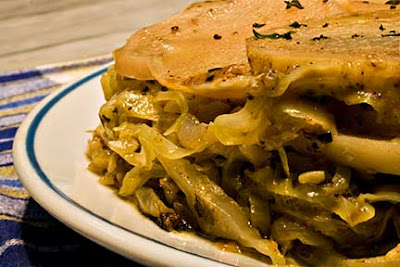
Potato Pie with Cabbage and MustardPotato Pie with Cabbage and Mustard (Πατατόπιτα με Λάχανο και Μουστάρδα)
Serves 4 – 6

Inspired by A Passion for Vegetables by Paul Gayler (Lyons Press 2000)
I’ve suggested using a 9” springform pan for this recipe because it makes unmolding the pie easier. However, I’ve made this in a well-oiled large soufflé dish and the pie slid right out, so a springform isn’t absolutely necessary. The vegetables are cooked separately and individually seasoned; keep in mind the finished dish and be careful not to over-salt any single vegetable. For a more decorative presentation, place pitted, dried black olives between the potato slices on the bottom layer. Turnips may be substituted for the potatoes.

1 pound Yukon gold or red potatoes
1/4 cup olive oil, divided
Salt
Freshly ground black pepper
6 cups thinly sliced yellow onions, cut in quarter moons
4 tsp. minced fresh garlic
1 tsp. freshly ground cumin seeds
1 Tbsp. wholegrain Dijon or
Creole mustard
4 cups thinly sliced green cabbage
4 tsp. minced thyme
1 cup grated
graviera or cheddar cheese

Preheat the oven to 450°F.

Wash, peel, and cut the potatoes into 1/4” slices. On a rimmed baking sheet, toss the potatoes with 1 Tbsp. olive oil and season with salt and freshly ground black pepper. Roast for 10 – 15 minutes or until the potatoes soften and start to turn golden.

Sauté the onions, lightly seasoned with salt and freshly ground black pepper, in 2 Tbsp. olive oil until the onions soften and start to brown. Stir in the garlic and cumin and cook for 2 minutes. Using a slotted spoon, remove the onions to a bowl. Stir in the mustard when the onions have partially cooled.

In the pan used for the onions, add the remaining 1 Tbsp. olive oil. Sauté the cabbage, lightly seasoned with salt and freshly ground black pepper, until the cabbage wilts completely. Remove from the heat and stir in the minced thyme.

Thoroughly oil a 9” springform pan; tightly cover the outside of the pan with foil to prevent oil from leaking out into the oven.

Layer the springform pan's bottom with 1/3 of the potatoes, cover the potatoes with 1/2 the cabbage, cover the cabbage with 1/2 the onions, and cover the onions with 1/2 the cheese. Repeat the layers, and finish with a layer of potatoes. (The recipe can be made ahead to this point and refrigerated; bring to room temperature before baking.)

Bake for 30 – 35 minutes, or until the top of the pie is golden and the juices bubbling. Let the pie rest in the pan for 5 – 10 minutes. Invert and unmold on a serving plate; if any potato slices stick to the bottom of the pan, carefully move them back to their place on top of the pie. Carefully cut into wedges and serve.

~~~~~~~~~~~~~~~~~~~~~~~
More Cabbage Recipes:
Greek Cabbage and Rice (Λαχανόρυζο) (My recipe for rice with cabbage, onion, thyme, tomato, and currants)
Red Cabbage with Mushrooms and Blueberries (Chou Rouge Forestière) (My review of Robert Reynolds and Josephine Araldo’s From a Breton Garden, including Araldo’s unique red cabbage recipe.)
Cabbage Rolls (λαχανοντολμαδάκια) (Peter Minakis’ recipe for Greek cabbage rolls stuffed with rice and meat.)
Mama’s Health Soup (Zoe’s Greek mother’s recipe for cabbage soup, written up by Lulu as a service to humanity).

Thursday, March 20, 2008

Recipes: Red Pepper Soup & Pizzettes (Σούπα με Κόκκινες Πιπεριές & Πιτσάκια)

My first cookbooks were homemade, full of hand-written recipes and clippings from newspapers and magazines. Because I lived on next to nothing, I glued the recipes on old pages of notes I’d taken in classes that had ended.

In those days, before the internet, interesting food writing was hard to find. Now it’s easy. It seems as if new food blogs pop up every day. The challenge is sorting the wheat from the chaff in the abundance of online recipes.

Jenn of
The Leftover Queen has made it easier to investigate the multitude of food blogs by maintaining a comprehensive listing of them. In addition, Jenn writes an article on The Leftover Queen every Friday highlighting some of her favorite blogs.

Another way to learn about new blogs is an event called
Taste and Create organized by For the Love of Food. In this event, food writers are paired with a randomly assigned partner, and asked to cook and review one recipe from their partner’s blog.

This month I was paired with
Tart Reform, a blog written by a smart woman who is thrilled about starting law school in the fall. The name of her blog is a clever play on the phrase “tort reform,” a political effort undertaken by insurance companies and major corporations to deny full compensation to those who are injured by another’s negligence.

Tart Reform includes many dessert recipes; the author is a dedicated baker. I rarely make desserts anymore, the result of marrying a man who doesn’t like sweets. Since I inherited a sweet tooth from my father, when I make desserts they end up in my belly or, more accurately, on my belly. Sadly, it’s better for me to admire Tart Reform’s lovely desserts than to make them.

Instead, I made
Red Pepper Soup, a recipe posted on Tart Reform’s blog last July. I’d originally thought of following Tart Reform’s lead and making the soup with green peppers for a festive St. Patrick’s Day soup. However, Tart Reform warned strongly against doing so, and said the soup “looks just like the goo from Ghostbusters” when made with green peppers. Not interested in having a Ghostbusters’ prop for dinner, I stuck with red peppers.

Red Pepper Soup, originally published in a
New York Times article by Marian Burros, was quick and easy because it doesn’t require pre-roasting or peeling the peppers. With a bag of Costco red peppers (in Alaska, $6.50 for 6 peppers), the recipe made a reasonably priced dinner for 4.

The soup is delicious and beautiful. A small amount of crushed red pepper flakes and minced thyme highlight its sweet red pepper flavor.

The peppers aren’t peeled, so bits of pepper skin remain in the soup after it is puréed. The original recipe left in the skins, but I didn’t like the soup's texture with them in it. It took 2 minutes to strain them out, leaving the soup with a pleasingly silky texture.

The original recipe suggests serving the soup with a dollop of crème fraiche and sprigs of thyme. Although we tried this suggestion and it tasted fine, we preferred the soup with a drizzle of best quality olive oil and a sprinkling of minced thyme.

I served the soup with
Pizzettes, another recipe from Tart Reform’s site. Pizzettes are nothing more than mini-pizzas; the original recipe came from Giada’s Family Dinners by Giada De Laurentiis.

I made the Pizzettes twice; once with gorgonzola as Giada called for and the second time with mozzarella, which was Tart Reform’s recommendation. We preferred mozzarella Pizzettes, although the ones with gorgonzola were also tasty.

Pizzettes are easy to make, even with putting together my own pizza dough (the original recipe used store bought). The concept is one I will use again; pizzettes make a terrific appetizer. They tasted great hot, and retained their flavor at room temperature, so could easily be made ahead for entertaining.


Red Pepper Soup (Σούπα με Κόκκινες Πιπεριές)

Serves 4
Adapted from Marion Burros,
New York Times (September 21, 2005) via Tart Reform
The amount of red pepper depends on how spicy you like your soup and the heat of your dried red peppers. When I first read the recipe, I was concerned 1 cup of liquid wouldn’t be enough, but I shouldn’t have worried. There is plenty of liquid because peppers are full of moisture and the soup is cooked covered. If you don’t mind pepper skins, there’s no need to strain the soup. Red Pepper Soup may be served hot or cold, and may be frozen for later use.


2 cups sliced onions
2 tablespoons olive oil
Salt
Freshly ground black pepper
1 Tbsp. chopped garlic
1/4 - 1/2 tsp. crushed red pepper flakes
1/4 cup dry white wine
6 large red bell peppers, stemmed, seeded and cut in 1” chunks
1 cup vegetable or chicken stock
4 tsp. minced fresh thyme, plus extra for garnish
Crème fraîche or sour cream, for garnish (optional) OR
Best quality extra virgin olive oil, for drizzling (optional)

Sauté the onion, lightly seasoned with salt and freshly ground black pepper, in olive oil until the onions soften and start to turn golden. Stir in the garlic and red pepper flakes and cook for 1 minute. Add the wine and boil until only 1 Tbsp. liquid remains.

Stir in the peppers, stock, and thyme, and lightly season with salt and freshly ground black pepper. Bring the liquid to a boil, cover, turn down the heat and simmer for 30 – 40 minutes, or until the peppers are tender

Using a stick blender, blender, or food processor, purée the soup until it's smooth. Strain the soup with a Foley food mill or strainer to remove the tough pieces of pepper skin. Taste and add salt or freshly ground black pepper, as needed.

Ladle the soup into bowls and garnish with extra virgin olive oil, crème fraiche, or sour cream. Sprinkle with minced thyme and serve immediately.

Variation: Drizzle with a blender pesto of 2 Tbsp. fresh thyme, 2 large cloves garlic, 1/4 tsp. salt, and 1/4 cup olive oil. This is good drizzled directly into the soup, and is particularly attractive (and tasty) when used in combination with crème fraîche.

PizzettesPizzettes (Πιτσάκια)
Makes 40 2 1/4” mini-pizzas
Adapted from Giada’s Family Dinners (Crown Publishing Group 2006) via
Tart Reform
Pizzettes are pizza dough cut into small circles and baked with a topping. I indented the dough before adding the toppings so they would stay on the pizzettes when the dough expands during baking. The oil is necessary at the end to bring out the full flavor of fresh basil. When I tried a basil topping without oil, the basil lost much of its flavor (the volatile oils dissipated when the cut basil hit the hot pizzettes). As with pizza, the topping for pizzettes is limited only by one’s imagination.

Dough:
1 cup warm water
1/2 tsp. sugar
1 tsp. yeast
2 – 2 1/2 cups all purpose flour
1 tsp. salt

Topping:
1/4 tsp. crushed red pepper flakes
1 1/2 cups shredded mozzarella
1 1/2 cups seeded and diced tomatoes, 1/2” dice
1/4 cup shredded fresh basil (basil chiffonade)
2 – 3 Tbsp. extra virgin olive oil
Salt

Make the Dough: Mix the water, sugar, and yeast in the bowl of a stand mixer. Let sit for 10 minutes. Using the mixer’s paddle attachment (or by hand), stir in the salt and enough flour to form a soft dough. Switch to the dough hook attachment. Knead on low speed for 5 minutes (or by hand), adding flour as necessary to prevent the dough from sticking to the bowl. Put the dough in an oiled bowl, cover with plastic wrap fixed to the bowl with a rubber band, cover with a dish towel, and let rise until doubled in size.

Make the Pizzettes: Preheat the oven to 425°F.

Roll out the dough until it is 1/4” thick. Using a 2” – 2 1/2” round cutter, cut out as many circles as you can and place 3/4” apart on parchment paper-lined baking sheets. Gather the remaining dough together, roll it out, and cut into circles. Use a glass (or other circular object) slightly smaller than the dough circles to indent their centers.

Sprinkle the dough rounds with crushed red pepper flakes, top with shredded mozzarella, and then with diced tomatoes. Bake for 10 – 12 minutes or until the cheese melts and starts to turn golden. If baking two sheets of pizzettes at one time, rotate the baking sheets after they've been in the oven 5 minutes.

While the pizzettes are baking, mix the basil and olive oil. As soon as the pizzettes come out of the oven, top each one with a little basil and olive oil. Sprinkle lightly with salt, and serve immediately.

Friday, February 15, 2008

Recipe: Roasted Butternut Squash and Onion Gratin (Κολοκύθα και Κρεμμύδια στο Φούρνο)

Snowy Day in Anchorage AlaskaIt's been snowing off and on for three days. Today the wind started up. I went outside to retrieve the garbage can lid and came back chilled to the bone.

For dinner, I wanted something solid and warming, so decided to roast butternut squash and turn it into a gratin. To balance the squash's sweetness, I added caramelized onions and nutty graviera cheese.

The result was exactly what I wanted. By the time dinner was over, I was warm and cozy and once again enjoying our snowy vistas.


Roasted Butternut Squash and Onion GratinRoasted Butternut Squash and Onion Gratin (Κολοκύθα και Κρεμμύδια στο Φούρνο)
Serves 4 - 6 as a main course or 8 - 12 as a side dish
The gratin may be baked in either a 9” square pan or a 9” x 13” pan, depending on whether you want a thicker gratin (use the square pan) or more area of cheese crust (use the rectangular pan). I cut up and roast the squash in olive oil before layering it with onions. I do this because caramelizing the squash significantly improves the gratin’s flavor. If you want to avoid olive oil, cut the squash in half, roast halves on parchment paper - cut-side down - at 375°F until tender, scoop out the flesh, and cut into 3/4” dice.

2 1/2 pound butternut squash (2 pounds cleaned; 6 cups cut in 3/4” dice)
4 cups diced onions (1/2” dice) (1 1/2 pounds)
4 Tbsp. olive oil, divided
Salt
Freshly ground black pepper
4 tsp. minced garlic
1 tsp. Aleppo pepper or 1/2 tsp. crushed red pepper (optional)
4 tsp. minced fresh rosemary
4 tsp. minced fresh thyme
1 - 2 cups (4 ounces) grated graviera, comte, or gruyere cheese (1 cup for 9” pan, 2 cups for 9” x 13” pan)
1 cup half and half

Preheat oven to 450°F.

Roasting the Squash: Remove the skin of the squash with a knife or vegetable peeler, cut in half and remove the seeds, and cut into 3/4” dice. Put the squash on a rimmed baking sheet and toss it with salt, freshly ground black pepper, and 2 tbsp. olive oil. Bake for 40 – 45 minutes or until the squash is browned on at least one side. Remove from the oven. (The recipe may be made ahead to this point.) Turn the oven heat down to 375°F.

Cooking the Onions: While the squash is cooking, sauté the onion, lightly seasoned with salt and freshly ground black pepper, in the remaining 2 Tbsp. olive oil until it starts to brown. Add the garlic and Aleppo pepper and cook for 1 minute. Turn off the heat, and stir in the rosemary and thyme. (The recipe may be made ahead to this point.)

Layering the Gratin: In an oiled baking pan, spread out half the onions. Top with a layer of roasted squash, then a layer of the remaining onions, then a layer of the cheese. Pour the half and half evenly over the cheese. Bake at 375°F for 30 – 40 minutes or until the cheese has formed a nice brown crust. Serve immediately.

Tuesday, February 5, 2008

Recipe: Roasted Beet and Garlic Tart (Παντζαρόπιτα)

It’s lucky I love colorful food. There’s been nice big bunches of bright red beets in my last few Full Circle Farm CSA boxes.

The best thing about an abundance of beets is being able to experiment. I’ve already written about my savory Roasted Beet and Thyme Risotto, and just completed testing on a wonderful Roasted Beet and Garlic Tart. The tart was inspired by the traditional Greek pairing of beets and skordalia, a strongly flavored garlic sauce.

In the last few months, I’ve made beet tarts with golden beets, chiogga beets, and blood-red beets. I’ve tried various combinations of herbs and spices, and different amounts of onions and garlic. I’ve tested crusts with butter, crusts with olive oil, and crusts with both.

My finished tart recipe layers roasted beets and onions sautéed until sweet, and is seasoned liberally with fresh garlic and thyme. Feta cheese and sour cream add tang, and a crisp, flaky crust balances the filling’s strong flavors.

Roasted Beet and Garlic Tart is equally good served hot or at room temperature (I’ve been known to eat it cold, straight from the refrigerator). As a result, it can easily be made ahead and served as an appetizer or first course.

Roasted Beet and Garlic TartRoasted Beet and Garlic Tart (Παντζαρόπιτα)
Makes one 9-inch tart; serves 4 -6
The tart can be made successfully with any variety of beet. No matter the variety, I always roast beets to concentrate and enhance their flavor. Using a little butter in the crust (filo) isn’t traditional (nor is this tart), but it adds good flavor and flakiness. Olive oil can fully replace the butter, and the crust will be tasty, but slightly tougher. Add more water to make the crust if butter is left out. The dough may also be made by hand. If mixing by hand, make sure the olive oil is evenly distributed in the flour and use a fork or pastry cutter to add the butter.

Mediterranean Cooking in Alaska has moved as of March 2011. To read this post please go to


http://www.laurieconstantino.com/beets-and-garlic-a-classic-pairing/


Please click on over and visit my new site. Thank you!


Tuesday, January 22, 2008

Recipes: Roasted Beet and Thyme Risotto & Halibut Confit with Lemons and Capers (Παντζάρια Ριζότο με Θυμάρι & Ψάρια Κονφί με Λεμόνι και Κάπαρης)

A couple days ago I read a recipe for beet gnocchi that caught my imagination. That night, I had yet another bout of insomnia. Instead of sleeping I thought about beets and gnocchi, and beets and pasta, and beets and rice.

Beets and rice: why not beet risotto? Once I thought of it, I could almost taste the earthy sweetness of beets in a creamy risotto, laced generously with Parmesan cheese and fresh thyme. I had to make it.


Luckily, there were beets in my last Full Circle Farm CSA box. I had previously roasted the beets to concentrate their flavor, which simplified the task of making beet risotto.

I paired the risotto with Pacific halibut poached in olive oil, known around my house as Halibut Confit. The recipe originally came from Gourmet Magazine; I remember Ruth Reichl writing it was one of her much-loved dishes. It is definitely my favorite way to cook halibut that’s been frozen.

Even when fresh, halibut can be dry; freezing makes this problem worse. However, when previously frozen halibut is cooked while submerged in olive oil, it stays moist - so long as you don't overcook it. This is because its juices can’t evaporate into the air, and stay in the fish under the protective coating of olive oil. Although the recipe uses a lot of olive oil, the fish doesn’t absorb the oil, and is not at all oily.

To avoid waste, I always strain the lemony oil and reuse it. Surprisingly, the oil doesn’t take up the flavor of the fish. The flavored oil makes wonderful salad dressing, and can be used in any dish that benefits from lemon.

Beet Risotto and Halibut ConfitTo serve, I spread the beet risotto on plates, and topped each serving with a chunk of tender halibut. I spooned capers and parsley over the fish, and garnished the plates with the oil-poached lemon slices that cooked with the fish.

The result was better than I imagined. Every bite contained flavor bursts that excited my taste buds. The capers were so good with the beet risotto I returned to the kitchen and spooned extra capers and parsley out of the olive oil.

The dishes pair amazingly well; each compliments and improves the other. However, the two don’t need to be served together to taste wonderful.

Roasted Beet and Thyme Risotto would be good served with a salad for a light supper, or as an accompaniment to chicken or turkey. Halibut Confit is an excellent way to cook halibut, no matter what side dishes are served with it. It’s been on my permanent recipe rotation since it first appeared in Gourmet, seven years ago.

Beet RisottoRoasted Beet and Thyme Risotto (Παντζάρια Ριζότο με Θυμάρι)
Serves 6
Fresh thyme is an integral part of this dish, and is worth seeking out.

7 – 8 cups vegetable or chicken stock
2 cups diced onion, 1/4” dice
1/4 cup olive oil
Salt
Freshly ground black pepper
1 1/2 cups Arborio rice
1/4 cup minced garlic
1 cup dry white wine
2 cups roasted and grated beets (2 medium beets) (see Note below)
1/4 cup minced fresh thyme
1 1/2 cups freshly grated Parmesan cheese

Bring the stock to a simmer, or heat it in the microwave until it is warm.

Sauté the onion, lightly seasoned with salt and freshly ground black pepper, until it softens and begins to turn golden. Stir in the rice so it is completely coated with oil and cook, stirring, for 1 minute. Add the wine, and stir until it is almost absorbed. Stir in the grated beets.

Add 1/2 cup of stock and cook over moderate heat, stirring constantly, until the stock is almost absorbed. Keep adding stock, 1/2 cup at a time, and stirring until each addition of stock is almost absorbed. When the rice is half done, stir in the thyme. (The recipe can be made ahead to this point, and finished right before serving. If you are going to make it ahead, after you take the rice off the burner, stir it until it cools down.)

Continue adding stock and stirring until the rice is tender, but still firm in the center (this takes 18 – 22 minutes). There may be stock left over. Stir in the cheese. Add stock until the risotto is the consistency you desire; it should be moist and creamy, not dry. Taste and add salt and freshly ground black pepper, as needed.

NOTE on Roasting Beets: Preheat the oven to 400°F. Wash the beets, cut off the greens leaving an inch of stem (don't cut into the beet itself), rub the beets with olive oil, and wrap tightly in a foil packet (or place in a tightly covered baking dish). Bake for 40 minutes to 1 1/2 hours, depending on the size of the beets and how fresh they are. The beets are done when they're tender if poked with a knife or skewer. Let the beets cool, and slip off their skins (I wear gloves when I do this to protect my hands from staining). (These can be made ahead and kept in the refrigerator for about a week.)

Halibut Confit with Lemons and Capers (Ψάρια Κονφί με Λεμόνι και Κάπαρης)
Serves 4 - 6

Adapted from March 2000 Gourmet magazine
Because it is cooked at such a low temperature, the olive oil can be reused. It picks up the flavor of lemons, but not of fish.

2 pounds halibut fillets, skinned
Salt
Freshly ground black pepper
1/2 cup capers, 1/4 c. roughly chopped and 1/4 c. left whole
1/2 cup minced parsley
2-3 lemons, sliced 1/8” thick
1 1/2 – 2 1/2 cups olive oil

Preheat oven to 250°F.

Wash and dry the halibut. Season it on both sides with salt and freshly ground black pepper. Using a glass baking dish just large enough to hold the halibut, line the bottom with lemon slices. Put the fish on top of the lemon slices. Mix the capers and parsley together, and spread evenly on top of the halibut. Cover the fish and herbs with a layer of lemon slices. Pour enough olive oil over to completely cover everything.

Bake for 45 to 70 minutes depending on the thickness of the halibut fillets. After 45 minutes, remove the pan of fish from the oven, carefully lift up a few lemons, and test for doneness. The fish will flake easily if it is done. If the fish isn’t done, return it to the oven. Halibut is dry when overcooked, so be careful not to leave it in the oven for too long. Remember the oil is hot and cools down slowly, so the fish will continue to cook if you leave it in the oil, even after the pan is taken out of the oven.

Serve the halibut with some of the capers and parsley in oil spooned over the top and slices of the lemon that cooked with the fish on the side.

~~~~~~~~~~~~~~~~~~~~~~~~~~~~
This is my entry for Weekend Herb Blogging, hosted this week by Anna from Anna's Cool Finds.

Tuesday, January 1, 2008

Recipe: Chicken in Rosemary Bread (Κοτόπιτα)

Twenty-five years ago, we lived in Bethel, Alaska. I was there five years. At the time, Bethel had about 4500 full-year residents, most of whom were Yup’ik Eskimos.

Located on the banks of the meandering Kuskokwim River, Bethel is 60 miles east of Alaska’s Bering Sea coast. Cold Siberian winds blowing across the treeless tundra made Bethel a chilly winter home.

During Bethel’s frosty winters, I made Chicken Bread (as this recipe is known in our family) quite frequently. Fragrant rosemary bread, stuffed with chicken and herbs, is an ideal meal to fight off winter chills. It is one of my husband’s favorite meals.

We hadn’t had Chicken Bread in years when I recently prepared it as a Christmas treat. In the past, I made it as a single glorious loaf. When company was over, I’d deliver what appeared to be a large round rosemary bread to the table. The flavorful filling was revealed only when I cut the bread into wedges for serving.

My husband often suggested I make individual loaves of Chicken Bread. Since this was for a Christmas treat, I took his suggestion and was glad I did. Single serving Chicken Breads are less messy and make better leftovers.

With single servings, every diner gets to cut open their own bread, exposing the filling and its heady aromas of herbs and chicken.

Chicken in Rosemary Bread (Κοτόπιτα)
Serves 6 - 8
If the filling isn’t cool when you stuff the breads, it may break through the dough when you try and seal it. Conscientious bakers should make the filling first and then the dough, so the filling has time to fully cool. If you are impatient (like me), and must stuff the dough when the filling is warm, bake the breads in individual gratin dishes instead of directly on the baking sheet. The gratin dishes support the dough and prevent break-throughs.
Note: Rosemary Bread is excellent served on its own, without the filling. For directions on making loaves of Rosemary Bread, go
here.

Bread:
2 cups warm water
1 Tbsp. honey
2 1/4 tsp. dry yeast (1 packet)
2 Tbsp. minced rosemary
2 tsp. salt
2 Tbsp. olive oil
2 cups semolina flour
2 – 2 1/2 cups all-purpose flour

Filling:
1 pound skinless, boneless chicken thighs (4 chicken thighs)
2 Tbsp. olive oil
1 cup diced carrots, 1/4” dice
1 cup diced celery, 1/4” dice
2 1/2 cups diced leeks or 2 cups diced onion, 1/4” dice
Salt
Freshly ground black pepper
1 cup white wine
1/4 pound thinly sliced prosciutto, cut into 1/2” pieces
1/4 cup minced garlic
1/4 cup minced thyme

Make the bread dough:
In a large bowl, mix the warm water and honey. Sprinkle the yeast over the water and let it sit for 10 minutes, or until the yeast begins to foam. Using a stand mixer with the paddle attachment (or by hand with a wooden spoon), mix in the rosemary, salt, olive oil, and semolina flour. Let sit for 10 minutes (this is necessary to properly hydrate the semolina).

Start mixing in the all-purpose flour. When the dough starts clumping together, switch to the dough hook (or to kneading by hand), and keep adding all-purpose flour until you have a moist, but not quite sticky, dough. Flour a board or counter, dump out the dough, and knead in flour as needed to make a smooth, soft dough. Let the dough rise for 1 hour, or until the dough has doubled in size. Punch down the dough.

Make the filling:
Wash the boned, skinned chicken thighs and dry them well. Cut into 1” pieces.

Sauté the carrots, celery, and leeks (or onions), lightly seasoned with salt and freshly ground black pepper, in olive oil for 3 minutes. Add the wine and bring to a boil. Stir in the prosciutto and garlic, reduce the heat, and simmer for 15 minutes, until the chicken is cooked through and most of the wine has evaporated. Stir in the thyme. Let cool completely.

Shape the chicken bread:
Preheat oven to 400°F.

For individual loaves, divide the dough into six pieces. Roll out each portion into a 9 – 10” circle. Place one-sixth of the filling in the center of each circle and draw up the sides, sealing the edges together. The sealed edges form a seam that runs lengthwise on top of the chicken bread from one edge to the other. Place the chicken bread on a parchment-paper lined baking sheet (or in individual gratin dishes). Repeat until all the chicken breads are made.

For one large loaf, roll the dough into a large circle, put the filling in the middle, and gently pull up the sides over the filling. Pleat the edges of dough together to form a topknot in the center of the loaf.

Bake for 30 minutes. Turn the oven down to 325°F and bake for 10 – 15 minutes for individual chicken breads and 15 – 20 minutes for one large chicken bread. Cool 5 minutes before serving.

Leftovers: Because the breads contain chicken, leftovers must be stored in the refrigerator. However, bread tends to harden up in the refrigerator, so leftover chicken bread is best eaten warmed up to soften the bread. The easiest way to do this is to put individual chicken breads on a paper-towel covered plate. Microwave on medium for 90 – 120 seconds, or until the bread is the temperature you desire.
~~~~~~~~~~~~~~~~~~~~~~~~~~~~
This is my entry for Bread Baking Day #5, hosted this month by Rolling in Dough.