Saturday, June 19, 2010

Recipe: Spinach Saganaki (Σπανάκι Σαγανάκι)

Fresh garden greens started trickling into Anchorage farmers’ markets this morning. In two weeks, the trickle will turn into a flood. Greens of all kinds thrive in our cool maritime climate.

Though cultivated greens are only now appearing, we’ve been eating wild greens for the past month. As soon as the snow melted, dandelion greens insistently pushed their way through the saturated earth and were ready to be harvested.  Fireweed shoots, devil’s club, and nettles; chickweed, dock, lamb’s quarters, and shepherd’s purse; all end up in the pot. (For tips on harvesting wild plants, go here.)

Until my husband and I first lived in Greece (1987), eating wild plants never once crossed my mind. I grew up in a family where picky eating was an art form. My father didn’t eat cheese, yogurt, or sour cream. My mother didn’t eat lamb, broccoli, cauliflower, cucumbers, squash, green pepper, and so many other foods I could never keep track.  If my parents didn’t eat it, neither did we.  Plus I had my own food quirks; raw tomatoes didn’t pass my lips until I was 24.

So wild greens? Not likely. It wasn’t just my family; the concept of eating wild greens didn’t remotely exist in the small Pacific Northwest town in which we were raised.  In our world, food came from the grocery store. Food could also come from the garden, but only from seeds that were planted and carefully tended. For wild food, we only knew berries, seafood, and dead animals. 

When  the first rains came the autumn of our arrival in Greece, there was a palpable sense of excitement in the village.  Once the rain stopped, half the village took to the fields, quickly gathering the emerging flush of snails. Over the next week, the dirt roads surrounding the village became peppered with the bent-over backsides of black-clad women, systematically working their way through the fields, gathering an abundance of fresh wild greens.

Though my Greek was limited in those days, I learned by example which greens were tastiest, how to harvest them, and how to clean them. I learned a mixture of different greens cooked together tastes better than a single variety cooked on its own.  I learned to love and crave greens of all kinds, wild and domesticated.  Most importantly, foraging became a permanent, enriching part of our lives.

These days, we eat greens several times a week, and I regularly post recipes using them.

For the past year, my favorite greens recipe has been Spinach Saganaki, based on a dish we had at Tzitzikas and Mermigas (Τζίτζικας και Μέρμηγκας), a restaurant on Mitropoleos Street, just off Syntagma Square, in downtown Athens. (A tasty place to eat on a shady street, particularly if you’re carrying a heavy load of way too many cookbooks; but that’s another story.) I’ve made the dish with a wide range of different greens, alone and combined, including spinach, Swiss chard, kale, amaranth, nettles, and dandelions; every version has been a success.

Two notes about the name:

1) I like calling it Spinach Saganaki only because it translates in Greek to the perfectly alliterative “Spanaki Saganaki.” Ignore the name and don’t limit yourself to making it with spinach; the dish is delicious with all kinds of greens. 

2) I recently described this dish to someone who asked why it had “saganaki” in the name since it didn’t include flaming cheese.  In Greek, “saganaki” is a small two-handled frying-pan, and gives its name to a range of dishes that are traditionally served in the pan, including shrimp saganaki, mussels saganaki, and cheese saganaki. As for setting cheese saganaki on fire, I’ve seen it done in Greece rarely, though it’s common in the US. I can’t explain the difference.

Spinach Saganaki (Σπανάκι Σαγανάκι)
Serves 4 as vegetable or 8 as part of appetizer spread (mezedes/μεζέδες)
Inspired by Βλητοκορφές Σαγανάκι at Tzitzikas and Mermigas/Τζίτζικας και Μέρμηγκας in Athens, Greece
Any wild or domesticated greens, alone or in combination, may be used for Saganaki. Because they cook fastest, it's easiest with greens like spinach, Swiss chard, domesticated dandelions, nettles, vlita (amaranth greens), or poppies. The recipe may be assembled hours in advance and refrigerated; bring to room temperature before baking.)

1/4 cup chopped fresh dill
1/4 cup chopped Italian parsley
3/4 cup chopped green onions, both white and green parts
3/4 cup diced fresh tomatoes, 3/4” dice
1/2 - 3/4 cup roughly crumbled feta cheese
3 -4 Tbsp. olive oil
Salt
Freshly ground black pepper
1/2 pound spinach, or any roughly chopped, cleaned greens (6 packed cups raw, 1 1/2 cups cooked)

Preheat the oven to 400°F.

Mix together all the ingredients except the spinach.

Bring a large pot of salted water to the boil. Add the spinach and cook just until it wilts (NOTE: The length of cooking time depends on the greens used. Spinach is done after 10 seconds; tougher greens will take longer.) Drain the spinach, quickly squeeze out any excess liquid, and mix it with the other ingredients. (The recipe may be made ahead to this point.)

Put the greens mixture in a 9” glass pie pan or other shallow baking dish.  Bake for 10 minutes.  Serve immediately with crusty bread and olives.

Variation: Substitute Peppadew peppers, or roasted red peppers, for the tomatoes. I’ve done this when I’ve been out of tomatoes and it changes the dish entirely, but in a very delicious way.  With tomatoes, the flavor of the dish is lighter and fresher; with peppers the flavor is deeper and heartier.

Variation: Substitute wild sea lovage or purslane for the parsley. (I’ll write about wild sea lovage and purslane tomorrow or the next day.)

~~~~~~~~~~~~~~~~~~~~~~~~~~~~~
This post is included in Weekend Herb Blogging hosted by Rachel from The Crispy Cook.

Sunday, May 9, 2010

Recipe: Asparagus Pistachio Pesto

The sun is shining, the sky is blue, wood frogs are singing love songs in the pond, and the last bit of snow on our property melted this afternoon.  Life is good.

Today’s good fortune follows yesterday’s happy evening spent with life-long friends. The food was excellent; the conversation even better (except, perhaps, when I was motor-mouthing). Ali and Tissy made richly delicious Salmon Chowder, using wild Alaska salmon. Moira and Jake oven-roasted vegetables, always a treat.  Teeny made her famous wild blueberry pies with berries she foraged and froze last summer.

I took advantage of asparagus flooding local markets to make seasonally fresh Asparagus Pistachio Pesto sauce for pasta.  I was inspired to create pesto with asparagus by my recent success with Lime, Cilantro & Edamame Spread, one of the tastiest things I’ve made all year. If edamame beans worked for pesto, I thought, why not asparagus?

Asparagus Pistachio Pesto was a resounding success. Lemon balanced the sweetness of asparagus, pistachios enhanced its nutty flavor, parmesan added richness, and garlic and mint downplayed asparagus’s grassiness without overpowering its spring green freshness. Even 2-year-old Maggie was a fan!


Asparagus Pistachio Pesto
Serves 6-8
Asparagus Pistachio Pesto is quite versatile. It’s perfect for pasta, but would also be good with boiled potatoes, sautéed vegetables, grilled/pan-fried seafood, poultry, sandwiches, and countless other partners. Roasting or grilling asparagus adds depth to pesto’s flavor, but you may instead blanch the asparagus for 2-3 minutes in boiling, salted water, and then cool it quickly in cold water. To speed things up, on a day when you’re grilling and have a hot fire, grill asparagus and save it to make Asparagus Pistachio Pesto the next day.  Pesto may also be made ahead; if you do, leave out the lemon juice and mix it in just before serving; this helps preserve pesto’s lovely green color.  To add richness and crunch, pistachios are used in both the pesto and as a garnish, for a total of 1/2 cup plus 2 tablespoons nuts. If you don’t have pistachios, pine nuts make a fine substitute. 

Parmigiano Reggiano is the best quality of “parmesan” cheese available; I like using it (and best quality extra virgin olive oil) in uncooked sauces where the flavors of individual ingredients really make a difference in the finished dish.  However, any cheese suitable for grating may be substituted for Parmigiano Reggiano. (In Anchorage, Costco sells reasonably priced Parmigiano Reggiano.)  I list the amount of cheese in ounces because 1 ounce of cheese can measure 1/4 cup or 3/4 cup depending on the type of grater used.  If you can’t measure cheese by weight, add a little at a time to the processor bowl until there’s enough to richly flavor the pesto, but not enough to overpower the asparagus.

For the asparagus:
1 pound asparagus
2 tsp. olive oil
Salt
Freshly ground black pepper

For the asparagus pesto:
Prepared asparagus stalks (tips reserved for garnish)
1/2 cup raw pistachio nuts, lightly toasted (to toast pistachios, see NOTE below)
2 ounces freshly grated Parmigiano Reggiano cheese
3 Tbsp. best quality extra virgin olive oil
2-3 cloves garlic, chopped
2 Tbsp. fresh mint chiffonade (thinly sliced)
1/2 tsp. salt
1 Tbsp. finely grated lemon peel
2-3 Tbsp. fresh lemon juice

For the pasta:
1 pound dry pasta of any shape or size
1 recipe asparagus pesto
Reserved asparagus tips
2 Tbsp. lightly toasted pistachio nuts, roughly chopped
Freshly grated Parmigiano Reggiano cheese

Precook the Asparagus:  For grilling, heat the grill to high.  For oven-roasting, preheat the oven to 510°F (if your oven doesn’t go that high, preheat it as high as your oven goes); put in a baking sheet to preheat with the oven. 

Snap woody ends off asparagus.  Toss asparagus with olive oil and season with salt and freshly ground black pepper.  Cook asparagus until just barely tender, about 4 minutes on the grill and about 5 minutes on the preheated baking sheet in the oven.  If using oven, when asparagus is done, take it off baking sheet immediately after removing it from oven.  Cut tips off asparagus and reserve for garnish.  Cut asparagus stalks into 1”lengths. 

Make the Pesto:  Put asparagus stalks in food processor bowl.  Add pistachios, cheese, olive oil, garlic, mint, salt, lemon peel, and 2 Tbsp. lemon juice (if making pesto ahead, don’t add lemon juice until final assembly to preserve pesto’s color).  Process until the ingredients are thoroughly combined, being sure to scrape down the bowl’s sides from time to time.  Taste and add lemon juice, as needed.

Cook the Pasta and Assemble:  Put a large pot of well-salted water over high heat until it’s rapidly boiling. Add the pasta and give it a stir to make sure pasta isn’t sticking to the pot’s bottom. Cook just until pasta is al dente.  Reserve 1 cup of pasta cooking water. Drain pasta.

Stir together cooked pasta, prepared pesto, and 1/2 cup of pasta cooking water until ingredients are well combined (add lemon juice if it wasn’t previously added to pesto). If the mixture is too thick, add the remaining pasta cooking water, as needed.  Taste and add salt, freshly ground black pepper, or lemon juice, as needed.  Top with reserved asparagus tips and pistachio nuts; toss lightly. Serve with bowl of freshly grated Parmigiano Reggiano cheese on the side.

NOTE:  To toast raw pistachio nuts, put them on a baking sheet in a preheated 325°F oven for 6-8 minutes, watching carefully to make sure they don’t burn. Take pistachios off baking sheet as soon as you remove it from oven.
~~~~~~~~~~~~~~~~~~~~~~~~~~~~~~~~~~~~~~~~
This is my entry for Weekend Herb Blogging, hosted this week Marija from Palachinka.

Friday, April 23, 2010

Recipes: Asian Salmon Burgers with Lime, Cilantro and Edamame Spread

A couple nights ago I made Asian Salmon Burgers with Lime, Cilantro and Edamame Spread. It’s difficult to overstate how good this was. The burgers had wonderful flavor, despite having been made with fish that was frozen last July. The spread was nothing short of amazing. I know I’m laying it on thick, but this combination was really really good.

I also liked the tasty leftovers. I had two extra salmon burgers that I shaped into patties and refrigerated raw. I cooked them for lunch: one yesterday and one today. Admittedly, I wrapped the leftovers well and refrigerated them immediately, but what I ate today was just as good as what I ate the first day. In other words, these are recipes that will be reliably good even if you make them ahead.


Asian Salmon Burgers
Serves 4


Lime, Cilantro and Edamame Spread
Serves 4


Mediterranean Cooking in Alaska has moved as of March 2011. To read this post please go to


http://www.laurieconstantino.com/easy-great-tasting-burger-using-frozen-salmon/


Please click on over and visit my new site. Thank you!


Wednesday, December 16, 2009

Round-Up: Weekend Herb Blogging #213

Weekend Herb Blogging celebrates the flavors and textures of herbs, fruits, and vegetables. Each week a different blogger takes responsibility for summarizing the delicious and nutritious recipes posted to Weekend Herb Blogging in the preceding week. This week it’s my turn.

Italian-inspired Fig Carpaccio from Australia, Middle Eastern-style Grilled Eggplant with Yogurt-Mint Sauce from Canada, and Swedish Ginger Cookies from Italy are a few of last week’s tasty dishes.  Their names alone, even without reading the fascinating posts accompanying the recipes, illustrate the multi-cultural, multi-national nature of Weekend Herb Blogging.

Without further ado, here’s this week’s round-up:

Saveur of The Taste Space
Toronto, Canada
Graziana of Erbe in Cucina (Cooking with Herbs)
Italy
Columbus, Ohio, United States

Elizabeth of Blog from OUR Kitchen
Toronto, Canada

New Paltz, New York, United States

Kalyn of Kalyn’s Kitchen
Salt Lake City, Utah, United States


Yeoh Cheng Huann of Eat.Read.Live
Singapore
California, United States
Haalo of Cook (Almost) Anything at Least Once
Melbourne, Australia

New York, United States
Mangocheeks of Allotment 2 Kitchen
Scotland
Cinzia of Cindystar
Lake Garda, Italy
Brii of Brii’s Blog
Lake Garda, Italy


Pepparkakor
(Swedish Ginger Cookies)

~~~~~~~~~~~~~~~~~~~~~~~~~~~~~~~
Next week Weekend Herb Blogging will be hosted by Haalo of Cook (Almost) Anything at Least Once. Haalo is the coordinator of WHB, having generously taken over the responsibility from Kalyn of Kalyn’s Kitchen who created WHB. If you want to participate, please send your entries to whb AT cookalmostanything DOT com by 3pm Utah time, Sunday, December 20, 2009.

Sunday, November 15, 2009

Recipe for Kale Puttanesca (Μακαρονάδα Πουτανέσκα με Κατσαρό Λάχανο)

Kale added to spicy puttanesca sauce makes a surprisingly delicious topping for chewy pasta. We recently enjoyed Kale Puttanesca for dinner and spent the whole meal alternating sounds of satisfaction with “this is really good” and “mmmmm -- I want this again.”

My recipe calls for more capers, garlic, and anchovies than are often used in puttanesca recipes; kale and chewy pasta balance the strong flavors.  Even so, Kale Puttanesca is best served to those, like us, who like assertively seasoned food.


To complement Kale Puttanesca sauce, I used Maccheroni al Ferratto, rustic artisanal pasta, originally from Calabria, that was traditionally shaped around iron umbrella spokes.

Lately, I’ve been comparing regular dried pasta from the supermarket with more expensive “artisanal” pastas found in specialty stores and upscale markets.  All dried pasta is made using extrusion dies, metal patterns that create unique pasta shapes.  However, the dies used to make regular and artisanal pastas differ: regular pasta is made using dies with a Teflon insert and artisanal pasta is made with bronze dies.

Regular pasta has a hard, slick finish, while artisan pasta is rough and uneven: “Traditional dies made entirely of bronze make the pasta surface rough [and more porous], which helps to capture the sauce, whereas the Teflon insert gives the product an even surface and a smoother texture,” according to food scientists. On the other hand, makers of Teflon-die pasta claim “the rougher surface [of bronze-die pasta] allows cooking water to penetrate too quickly, making for less-than-ideal quality.”

The two types of pasta also differ in how they’re dried. Regular pasta is dried in ovens “the size of a football field” for 2-4 hours over high heat.  Artisanal pasta is dried for 24 to 50-plus hours “in very warm (but never hot), humid environments in which moisture can be reduced slowly, without damaging the texture of the finished product.”

I prefer artisanal pasta with very simple pasta sauces, such as oil and garlic, where the texture of the pasta makes a significant difference. I also prefer artisanal pasta in dishes, like Kale Puttanesca, that call for thicker, chewier pastas.  For all other purposes (and when I don’t want to spend the money on artisanal pasta) I happily use regular dried pasta from the supermarket.

No matter what type of pasta you use, be sure to cook it al dente; soft, overdone pasta is the bane of even the best pasta sauce.


Kale Puttanesca  (Μακαρονάδα Πουτανέσκα με Κατσαρό Λάχανο)
Serves 4
Any sturdy green, wild or domesticated, can be substituted for kale. The amount of crushed red pepper depends on how spicy you like your food.

Sauce:
1 bunch kale
3 Tbsp. capers, preferably salt-cured
3 Tbsp. olive oil
2 Tbsp. minced garlic
10 anchovy fillets, minced
1/2-1 tsp. crushed red pepper flakes
2 14.5 ounce cans diced tomatoes, with juice
1/2 cup oil-cured black olives or throumbes, pitted and roughly chopped
Freshly ground black pepper

12-16 ounces Machheroni al Ferratto or other chewy-style pasta

Wash the kale to remove any dirt.  Strip the greens from the tough center kale stems. Shred the kale greens and discard the stems (or save them for another use).

Rinse the capers well. If using salt-cured capers, soak them in a bowl of cold water for at least 10 minutes.

Fill a large pot with enough water to cook the pasta, salt it well, and put on a burner over high heat.

Heat the olive oil until it's just warmed though, using a pan large enough to hold all the ingredients. (If oil is too hot, garlic will burn; it’s best to warm the oil over medium heat.) Stir in the garlic, anchovies, and red pepper flakes and cook, stirring, for 1 minute. Stir in the tomatoes, olives, freshly ground black pepper, shredded kale, and drained capers. Bring to a boil, cover, turn down the heat, and simmer for 20-30 minutes, or until the kale is tender.

While the sauce is cooking, and when the salted water reaches a full boil, cook the pasta until it’s al dente (exact cooking time depends on the type of pasta).  Reserve 1 cup of pasta cooking water. Drain the pasta.

When the kale is tender, stir in the cooked pasta, making sure all of it is coated with sauce. Taste and add freshly ground black pepper, as needed. If the sauce is too thick for your taste, thin it with a little pasta cooking water. 

Serve immediately with plenty of crusty bread and a crisp green salad.
~~~~~~~~~~~~~~~~~~~~~~~~~~~~~~~
This is my entry for Weekend Herb Blogging, sponsored by Haalo and hosted this week by Winnie from Healthy Green Kitchen.

Friday, November 6, 2009

Salty Cake (Easy Cheese Bread) (Kέικ Αλμυρό)

Greeks are famously hospitable.  Visitors to Greek homes are warmly welcomed and showered with treats of all kinds.  Coffee with sweet pastries, ouzo with savory delicacies, water with preserved fruits; no matter your beverage, a Greek hostess quickly puts together a tasty accompaniment.

For some of us, enjoying Greek hospitality comes with a cost: overeating.  Before I spoke Greek, this was more of a problem. Because we couldn’t converse, people communicated love and affection by giving me double portions. Since everything was delicious, and I didn’t know how to decline, I ate it all.  Unfortunately, I was gaining 5-10 pounds for every month we spent in Greece, and dieting for 2 months afterwards so my clothes would fit again.

I finally learned how to say no. This is more difficult than it sounds.  It’s nearly impossible for a Greek hostess to accept “no” for an answer. The more you decline, the more you’re offered.  It’s also slightly rude on my part; if I were a more polite guest, I’d graciously accept some of the tasty tidbits.

After ten years of declining all snacks (and apologizing for being such a difficult guest), our friends and family have grudgingly accepted this peculiarity of mine – at least when it comes to sweets. Diabetes is rampant in the village and, in the last few years, turning down sweets has become a medical necessity for many.  Since so many can’t eat sweets, village hostesses now keep a supply of “salty” (almyro-αλμυρό) snacks on hand.

In the village, salty snacks aren’t things like potato chips, pretzels, and peanuts. Salty, in this context, just means not sweet.  Salty cookies (koulourakia) look identical to sweet cookies but, without the sugar, taste like thick crackers. Salty cakes include ingredients like cheese, olives, or ham; in the US, they’re called quick breads.

Lately, when I decline something sweet, a hostess may triumphantly declare that she has something salty instead.  Surely, I can try a few bites of a salty treat, something with absolutely no sugar? No, I sadly say, I can’t manage anything salty either, even though I’m sure it’s absolutely delicious.

Although I’m a difficult guest, I happily fulfill my duties as a hostess. In our village house, where visitors constantly stop by, the refrigerator is stocked with beverages, pastries are in the cupboard, and there’s even a salty little something for those who don’t eat sweets.

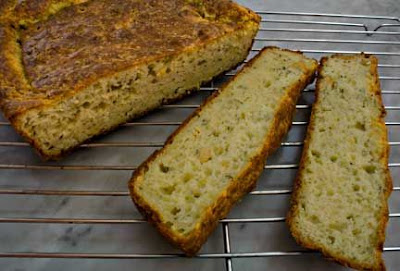
Treasured Recipes: A Collection of Personal Recipes from the Women Members of the Hellenic Athletic Club of Khartoum and Their Friends (Khartoum 1983), the Sudanese-Greek cookbook I recently wrote about, has an interesting recipe for Salty Cake.  This recipe is quite simple, but produces a rich, cheesy quick bread with wonderful flavor and a hint of mint. It’s tasty served to visitors as a snack or for brunch, but it also makes a nice accompaniment to soup or chili.


Salty Cake (Easy Cheese Bread) (Kέικ Αλμυρό)
Makes 1 9”x9” square bread or 1 9”x5” loaf
Adapted from Lefko Tsanakas and Lucy Vassiliou’s recipe for “Cake Almiro” in Treasured Recipes: A Collection of Personal Recipes from the Women Members of the Hellenic Athletic Club of Khartoum and Their Friends (Khartoum 1983)
Lefko and Lucy call for either feta or a combination of various cheeses, but emphasize using some “feta cheese is essential.” The recipe may be doubled and baked in a Bundt pan for an attractive brunch offering (when doubling the recipe, use 7 whole eggs and no egg yolks). This bread is best served warm. If you bake it ahead, wrap it in foil and refrigerate; to serve, warm in a 350°F oven for 20 minutes.

3/4 cup softened butter
3 large eggs
1 egg yolk
2 cups crumbled feta or 1 cup crumbled feta and 1 cup grated graviera, asiago, or other cheese
2 Tbsp. dried mint, crushed
1 3/4 cup flour
1 1/2 Tbsp. baking powder
3/4 cup milk

Preheat the oven to 350°F.

Butter a 9” square pan or 9”x5” loaf pan, dust bottom and sides with flour, tap out and discard any excess flour.

Beat the butter until creamy. Beat in the eggs and yolk, one at a time.  Add the cheese and mint and mix to combine.  Stir together the flour and baking powder.  Add flour to the cheese mixture one third at a time, alternating with additions of milk (one third at a time), until all is combined. Pour batter into the prepared pan. Smooth out the top to evenly distribute the batter.

Bake for 45-60 minutes, or until the bread has a nice brown crust on top.  Let cool for 30 minutes and remove from pan. Serve warm or at room temperature.

Monday, November 2, 2009

Greek Cookbooks: Hellenic Athletic Club of Khartoum with Recipe for Spiced Gazelle Pilaf (Πικάντικο Πιλάφι με Κρέας)

Modern Greeks have been in Sudan since the early 20th century.  In 1910, a Greek Orthodox church opened in Khartoum.  By 1956, there were 6000 Greeks and 1000 Cypriots in the country.  “The Greek presence was particularly strong in the capital, Khartoum, where all the restaurants, cafes, hotels, cinemas, and most shops were Greek-owned.” 

In 1983, the Sudanese president imposed Islamic Sharia law, which fanned the flames of civil war between the Muslim north and Christian-Animist south.  From then to now, civil war and famine have killed millions of Sudanese. Many Europeans fled to their homelands. By 1992, only 500 Greeks remained in Sudan.  Today, there are only about 300.


Dancers at the Greek School in Khartoum, Sudan
Photograph courtesy of Apouro

Although the way of life for Sudanese Greeks has changed since 1983, there is still a Greek Orthodox church and Greek school in Khartoum.  The Hellenic Athletic Club is a hangout for Khartoum expats.  The Greek school’s students celebrate Greek Independence Day, Greek Easter, Oxi Day (when Greece stood up to Mussolini), and the 1973 Athens Polytechnic Uprising against the then-ruling Fascist junta.

Greek readers should check out this compelling description of a scalding hot Greek Easter in Khartoum, written by the Greek Ambassador to Sudan. For English speakers, the poetry of the original Greek is so powerful, it seeps through the vagaries of Google translator. Anyone interested in more about Khartoum can read this fascinating blog written by a Greek teacher who lives there (in Greek, but with fun pictures).

In 1983, the year the Sudanese civil war reignited, Greeks in Khartoum published a cookbook: Treasured Recipes: A Collection of Personal Recipes from the Women Members of the Hellenic Athletic Club of Khartoum and Their Friends (148 pages, 191 recipes, 6.5” x 9”). The editors explain the recipes “reflect the nature of our community here in the Sudan, and the influences upon our cooking, resulting from our way of life, from travel, and through marriage to other nationalities.”

Just as I’ve learned to cook Mediterranean food in Alaska, Greeks in Sudan adapted traditional recipes to their new country.  Fish recipes call for Nile perch, a giant freshwater fish that grows over 6 feet long and over 500 pounds.  Sudanese limes are recommended in lieu of lemons. Egyptian Roumi (Romy) cheese stands in for traditional Greek varieties. Spicy shatta is used for seasoning.

The recipe for Stifado (Greek stew) calls for gazelle meat. Its creator says when the stew is done, “The only thing left is to sit before the camp fire with some friends and polish the whole thing off!”  Gazelle also makes an appearance in George Limnios’ recipe for “Rice and Gazelle Pilaf.”  (An internet site counsels Khartoum visitors who “fancy” a camping safari to call “Greek guide George Limnios [who] happily provides safari advice and organizes trips.”)

Other interesting recipes in Treasured Recipes include: Tomato-Bacon Soup, Eggplants with Eggs, Spaghetti with Bacon-Olive Sauce, Sheftalia, Purslane Stew, Stuffed Mortadella Rolls, Baked Eggplant Packets, Grape Leaves with Onion, Zucchini, and Carrot Stuffing, Salty Cake, and four different recipes for Olive Bread (no explanation for the abundance of Olive Bread recipes).

The idea of “gazelle pilaf” stuck in my mind; I had to make it. (I also had to buy my home when I saw it had a gazebo and have a strong attraction to gazetteers.)  Luckily, there were moose steaks in the freezer to stand in for gazelle, though deer, lamb, or beef would also work. 

The tantalizing, cinnamon aroma of tomato-meat sauce soon filled the house.  Even before adding rice, the rich and spicy sauce was amazing on its own; neither of us could keep our tasting spoons away from its deliciousness. (The sauce, thinned with a little stock, would make terrific soup.)  The tastes of the individual spices had blended into an entirely new and wonderful flavor; no single spice dominated.  The rice soaked up the sauce, ensuring we enjoyed every last bite of the pilaf.


Spiced Gazelle Pilaf (Πικάντικο Πιλάφι με Κρέας)
Serves 4-6
Adapted from George Limnios’ recipe for “Rice and Gazelle Pilaf” in Treasured Recipes: A Collection of Personal Recipes from the Women Members of the Hellenic Athletic Club of Khartoum and Their Friends (Khartoum 1983)
The cinnamon sticks and whole cloves must be removed before serving. To make this easier, wrap the spices with cheesecloth or muslin and tie the packet up with string, instead of cooking them loose in the liquid.

1 lb. boned and trimmed gazelle (or moose, deer, lamb, or beef) meat
Salt
Freshly ground black pepper
1/4 cup olive oil
3 cups diced yellow onion, 1/4” dice
2 Tbsp. minced garlic
1 tsp. coriander seed, ground
1 tsp. cumin seed, ground
1 tsp. Aleppo pepper or 1/2 tsp. crushed red pepper flakes (optional)
1 cup red wine
1/4 cup tomato paste
4 cups water
3 cinnamon sticks
8 whole cloves
1 cup long-grain rice

Wash the meat, dry it well, and cut it into 1” cubes. Season the cubes on all sides with salt and freshly ground black pepper.  Heat the olive oil in a large pot (that has a lid) and thoroughly brown the meat.  Stir in the onions, lightly seasoned with salt and freshly ground black pepper, and sauté until they soften and begin to turn golden. Mix in the garlic, coriander, cumin, and Aleppo pepper and cook for 1 minute.  Stir in the wine, bring to a boil, and cook until it reduces by half. Stir in the tomato paste until it’s evenly distributed.

Stir in the water and packet of cinnamon sticks and cloves.  Bring to a boil, turn down the heat, and simmer for 75-90 minutes or until the meat is tender and the liquid reduced to about 2 1/2 cups.  Remove and discard the cinnamon sticks and cloves.  Stir in the rice, cover the pot, turn down the heat as low as possible, and cook for 20 minutes or until the rice is cooked and the liquid absorbed.  Serve immediately.