Several months ago, I’d read a recipe for fig and olive tapenade. I love tapenade, a Provençal paste of black olives, anchovies, capers, herbs, garlic, lemon, and olive oil, so decided to pair it with my bounty of figs. Unfortunately, I couldn’t remember where I’d read about fig tapenade, a distressing complication of owning too many cookbooks.
I did find a few recipes for tapenade with figs on the internet, but either the ingredient list or procedure didn’t appeal to me, so I was stuck with creating my own version. I started with a basic tapenade, left out the anchovies, and added figs and a healthy dose of wild thyme.
The sweet figs and salty olives and capers combine to form a deliciously vibrant spread. I made it this morning, enjoyed Fig Tapenade and Rosemary Bread for lunch, and brought the rest to a New Year’s Eve party tonight.
The best thing about Fig Tapenade is how easy it is to make. The ingredients are simply tossed into the food processor and processed until smooth. The flavor comes from good ingredients, not hard work on the part of the cook.
Fig Tapenade is rich and flavorful. It can be served on its own with crusty bread, or dressed up, as I did tonight, with Garlicky Goat Cheese Spread and Croutons.
 Fig Tapenade
Makes about 2 cups
Although it may be tempting to buy pitted olives, their flavor pales in comparison to that of olives with pits. To easily pit Kalamata olives, spread them out on a cutting board and smash each olive with a meat pounder or other heavy object. After being pounded, the pits slip right out of the olives.
1 cup dried black mission figs
1 1/2 cups Kalamata olives
2 Tbsp. capers, preferably salt-cured
1 Tbsp. dried thyme, crushed
1 Tbsp. minced fresh rosemary
1 Tbsp. chopped garlic
3 Tbsp. lemon juice
1/2 tsp. salt
1/2 tsp. freshly ground black pepper
1/2 cup olive oil
Cut any stems off the figs, and cut the figs into quarters. Rinse, drain, and dry the olives and capers. Remove the pits from the olives.
Place all the ingredients, except the olive oil, in a food processor, and process until the ingredients are chopped into small pieces. While the machine is running, pour in the olive oil and continue processing until the ingredients form a smooth paste. Scrape down the sides of the bowl and process again. Place in a glass container and refrigerate for at least 3 hours before serving.
Garlicky Goat Cheese Spread
Makes 2 cups
If you prefer mild hints of garlic, use the smaller amount; bolder palates may prefer the full measure. Garlicky Goat Cheese Spread may be served in a bowl, or unmolded onto a platter. If you want to serve it unmolded, line a bowl large enough to hold the spread with plastic wrap. Spoon the spread into the plastic-lined bowl, press down to remove any air pockets, and cover the spread with plastic wrap. To unmold, open up the plastic wrap so the spread is exposed, invert the bowl onto a platter, then remove the bowl and plastic wrap.
1 – 3 cloves garlic
1/2 tsp. salt
1 cup (8 ounces) chèvre (soft goat cheese)
1/2 cup mascarpone or cream cheese
1/2 cup whole-milk yogurt or sour cream
Puree the garlic by mashing it together with the salt either in a mortar and pestle or on a cutting board with the flat side of a knife blade. Mash the pureed garlic, chèvre, mascarpone, and yogurt together (this may be done in a food processor). Refrigerate for at least 3 hours before serving.
1/4 cup olive oil
1/4 cup butter, melted
1/4 tsp. salt
2 baguettes, cut into thin slices
Preheat the oven to 325°F. Mix all the ingredients together in a small bowl. Brush the garlic butter-oil mixture onto one side of each baguette slice. Put the buttered baguette slices in one layer on a baking sheet and cook for 10 – 15 minutes, or until the bread slices are crispy.

 Spicy Squash Soup (Σούπα με Kολοκύθα)
 Rosemary Bread (Ψωμί με Δενδρολίβανο)
 ~~~~~~~~~~~~~~~~~~~~~~~~~~~~
 Pan Seared Scallops Piccata (Χτένια Πικάντικο)
 The menu shows we ate well in 1998: gravlax, oysters, clams, calamari, shrimp, king crab, and scallops were all part of the meal. Although the food was just as good, this year’s Christmas Eve dinner was no match for 1998, when much of my family was happily together and the food was joyously cooked with my sister. I’ll remember the 1998 meal for the rest of my life.

 Periwinkles in Dill-Onion Wine Broth (Όστρακα “της Πλώρις”)
 Spicy Pesto Grilled Shrimp (Γαρίδες με Πικάντικο Πέστο)
 At the time, Tuna Tartare was one of Aqua’s signature dishes, and rightly so. It was beautifully presented: a pile of chopped sashimi grade ahi tuna in the middle of a white plate, surrounded by piles of spices, perfectly ripe pears, mint, and habanero chiles, topped with a quail egg and dressed with sesame oil. With two spoons, the server mixed all the ingredients together tableside, and gracefully created a mountain of tuna tartare in the center of the plate, accented by toast points.
 Tuna Tartare with Mint, Sesame Oil, and Hot Peppers (Ταρτάρ Τόνου)
 Alaskan Oysters on the Half Shell with Mignonette Sauce (Στρείδια με Σος Μαυρού Πιπεριού)
 Pine Nut Cookies (Biscotti con Pignoli)
 Apple Pancakes


 Christmas Nougat Cookies (Angel Cookies)

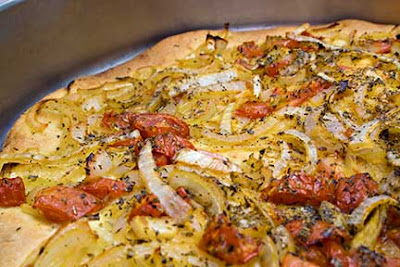
 Maryann's advice came at a time when the local Costco store was carrying flats of huge, gorgeous pomegranates. It was kismet; I had to buy them. Once the pomegranates were piled on my counter, I couldn’t stop thinking about Tom and Joanna’s chicken in pomegranate sauce. I decided to create my own version.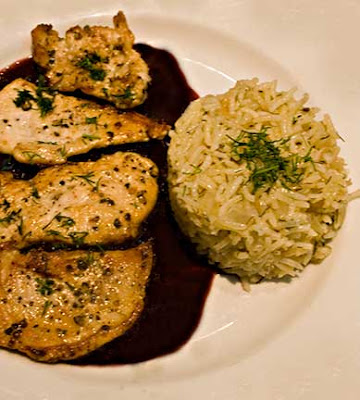
 This is my entry for Weekend Herb Blogging #113, hosted this week by Astrid from
